Slope Stability Analysis Software | Fast, Accurate & Easy-to-Use
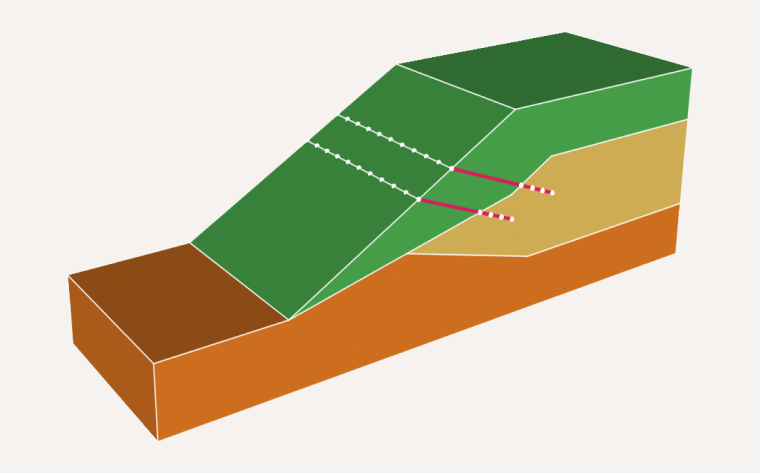
Slope stability analysis software is essential in geotechnical engineering. Whether assessing a natural slope or designing an engineered slope or embankment, having the right tool can make the difference between guesswork and precision. OPTUM GX offers a powerful and easy-to-use program for modelling and analysing slope stability – in both 2D and 3D.
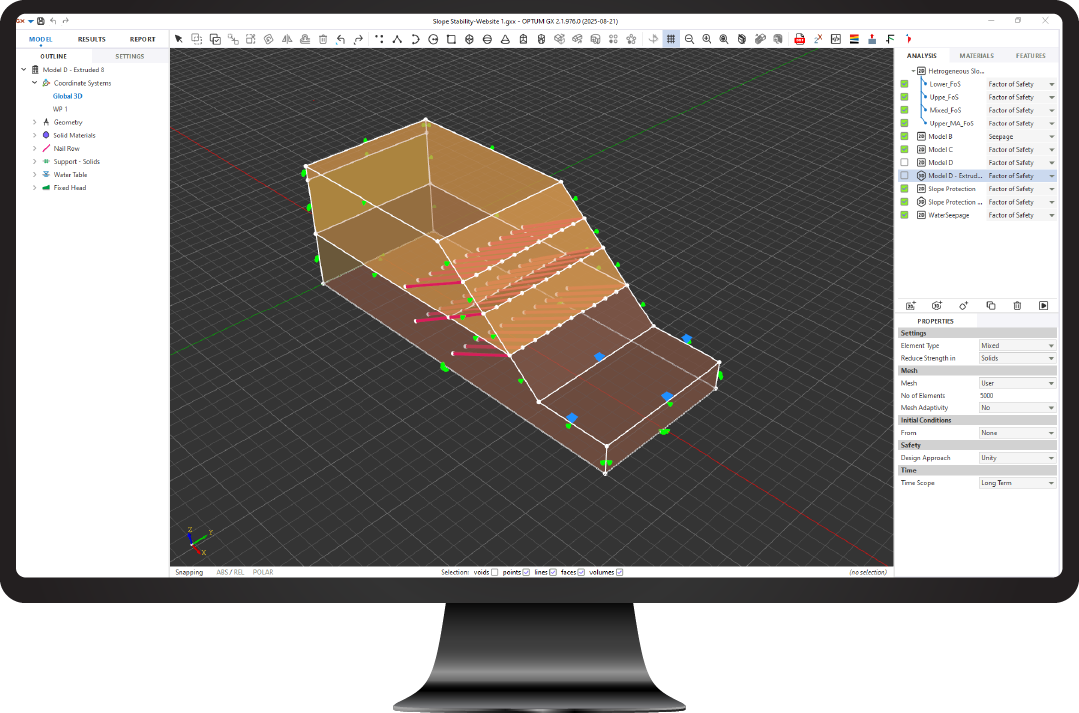
With advanced methods such as Finite Element Limit Analysis (FELA), OPTUM GX delivers fast, transparent, and reliable results. Built for geotechnical engineers, the software lets users analyse complex geometries, layered soils, pore pressures, and staged construction with ease.
As one of the most trusted slope stability analysis software tools, OPTUM GX is used for everything from routine design tasks to critical infrastructure projects and advanced research.
Why Choose OPTUM GX for Slope Stability?

Advanced Numerical Methods
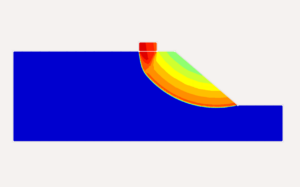
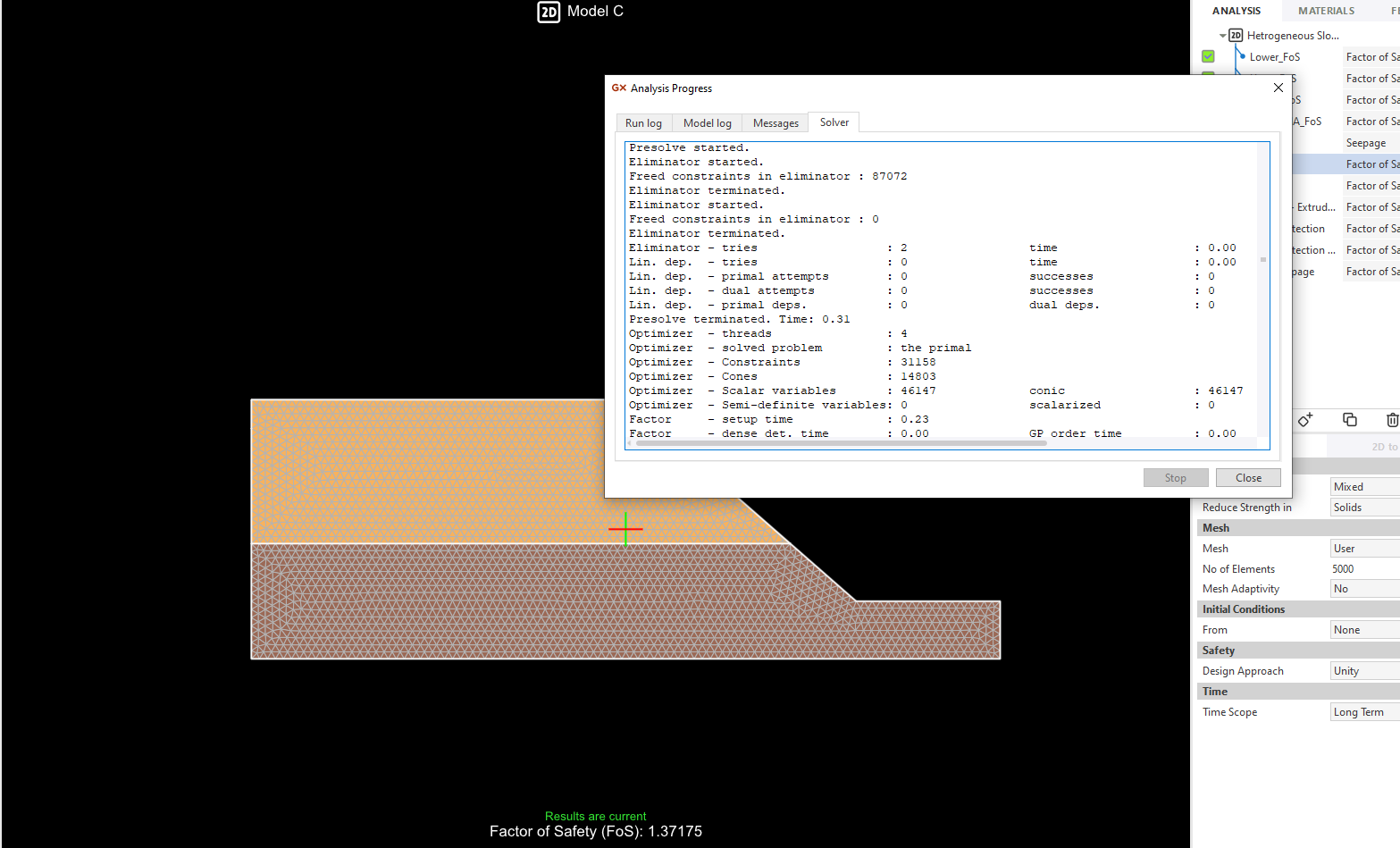
OPTUM GX replaces traditional limit equilibrium with modern FELA and OBFEM – a proprietary method that combines the speed and robustness of limit analysis with the structured accuracy of FEM. By solving directly for collapse without iterative strength reduction, OBFEM delivers fast, stable, and reliable results – even in complex slope conditions and layered soils.
Slope Stability Analysis with Non-Associated Materials
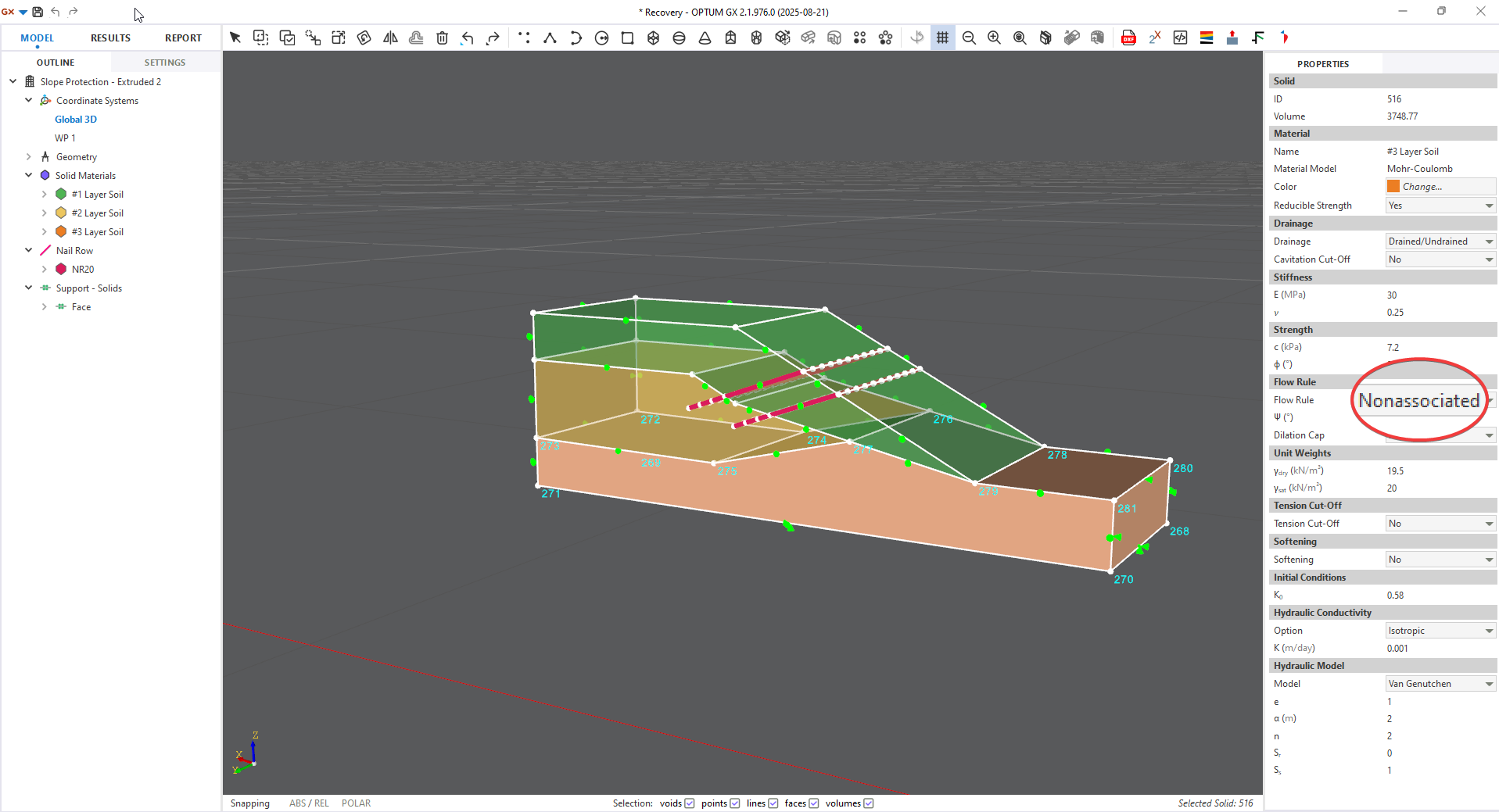
OPTUM GX makes it possible to perform slope stability analysis with OBFEM for non-associated materials. This overcomes a key limitation in conventional FELA approaches, which typically assume associated flow rules. The process in GX is straightforward and automated, giving engineers more realistic results for soils with frictional–dilatant behaviour.
Failure mechanism mapping with FELA and Python
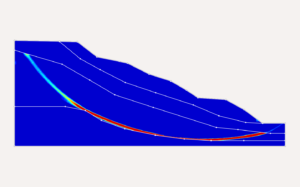
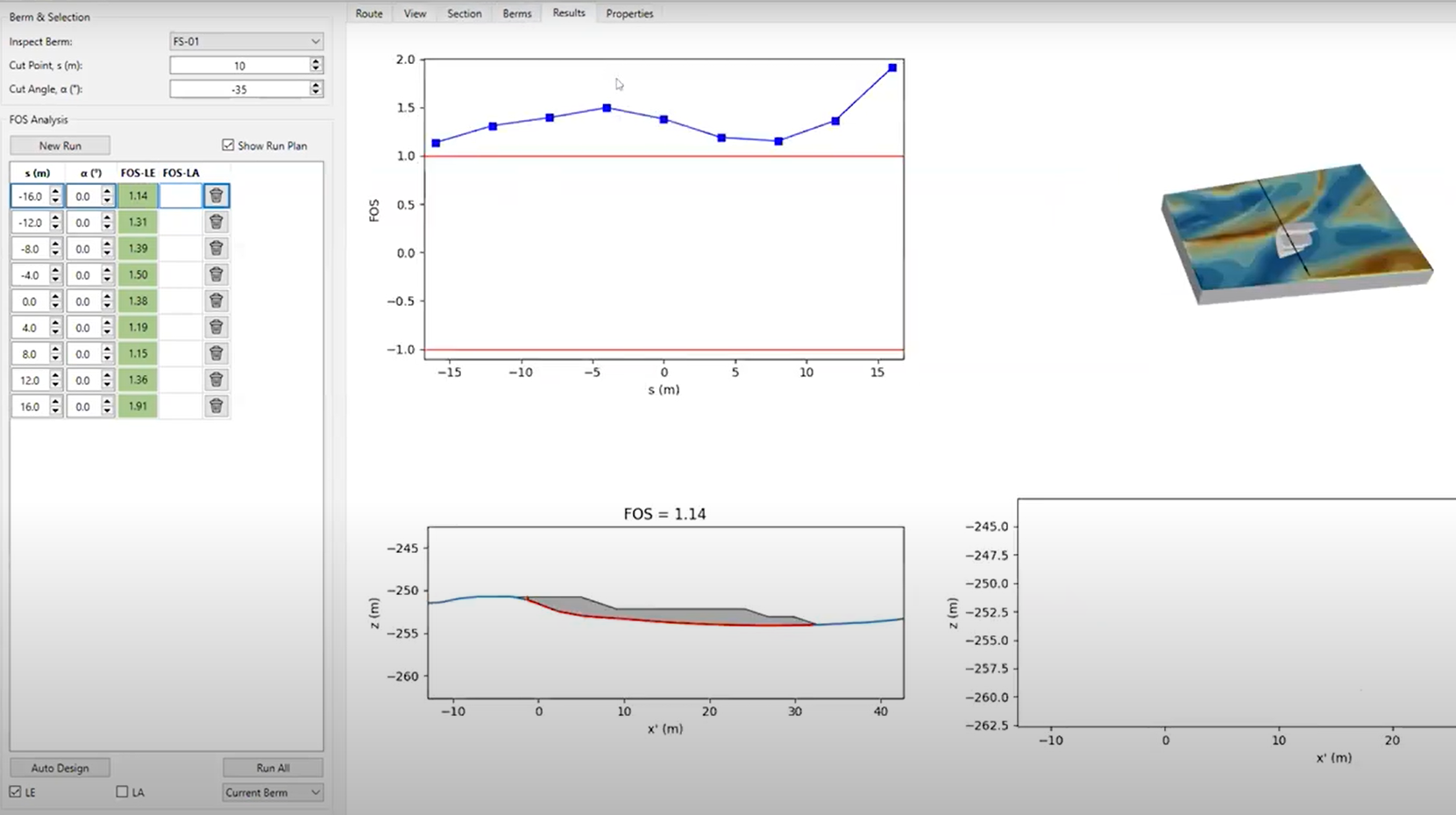
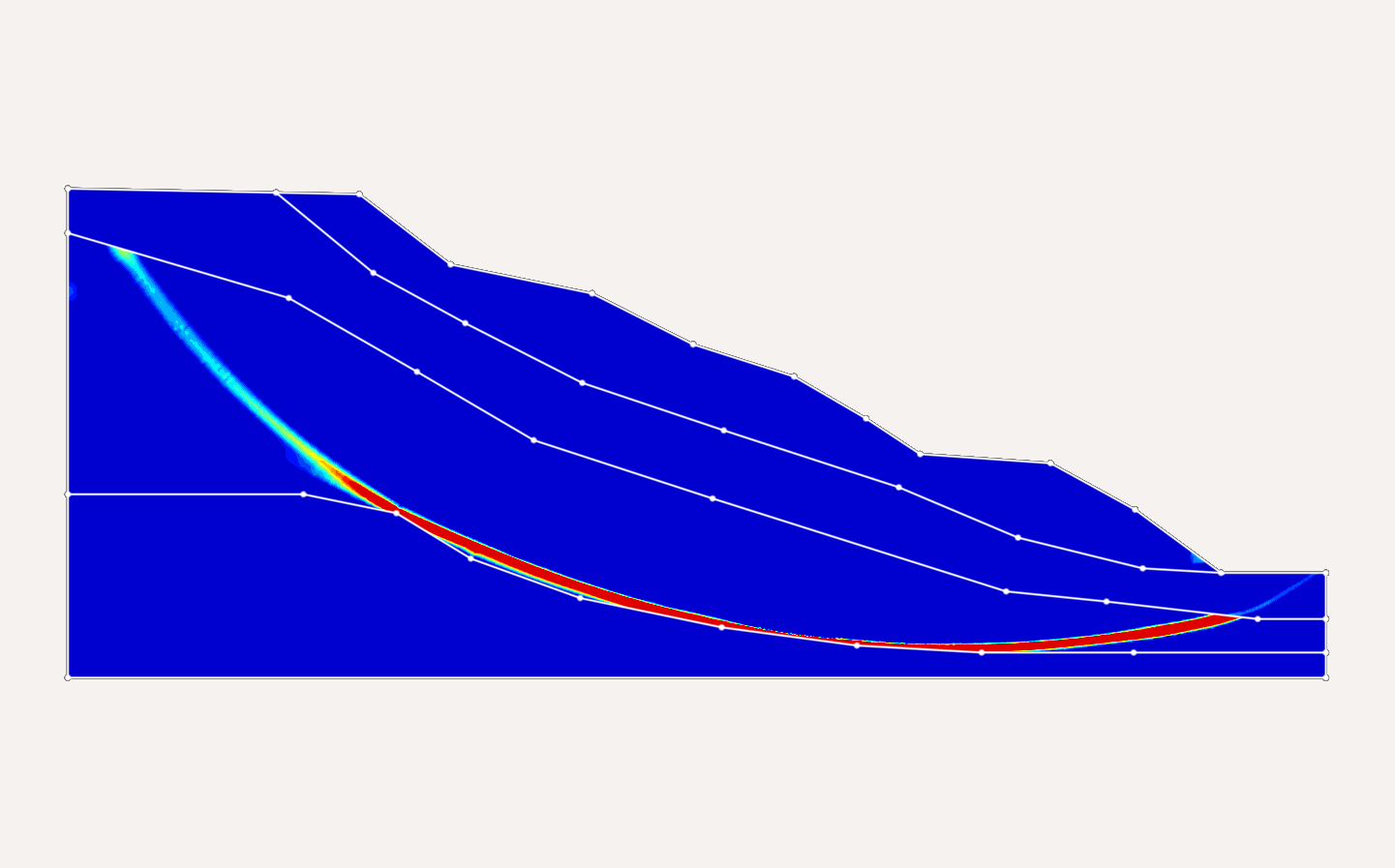
With Python scripting in OPTUM GX, engineers can explore multiple potential failure mechanisms using FELA and generate a safety map of the slope. This provides a clear visual overview of where different mechanisms may occur and how safety factors vary across the slope – supporting more robust design decisions.
Automated Reporting & Documentation
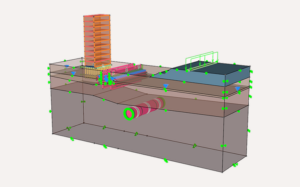
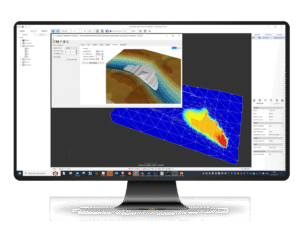
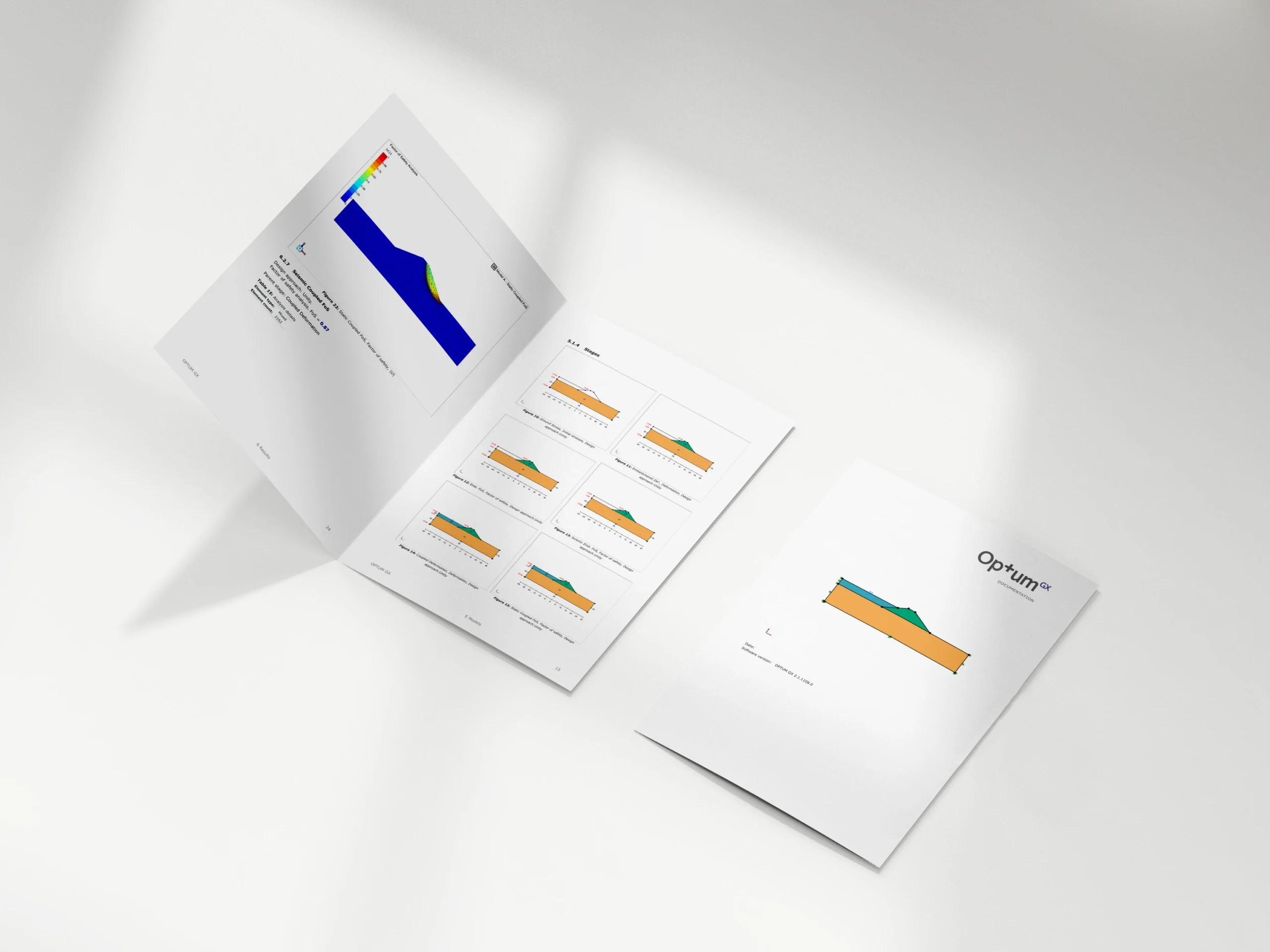
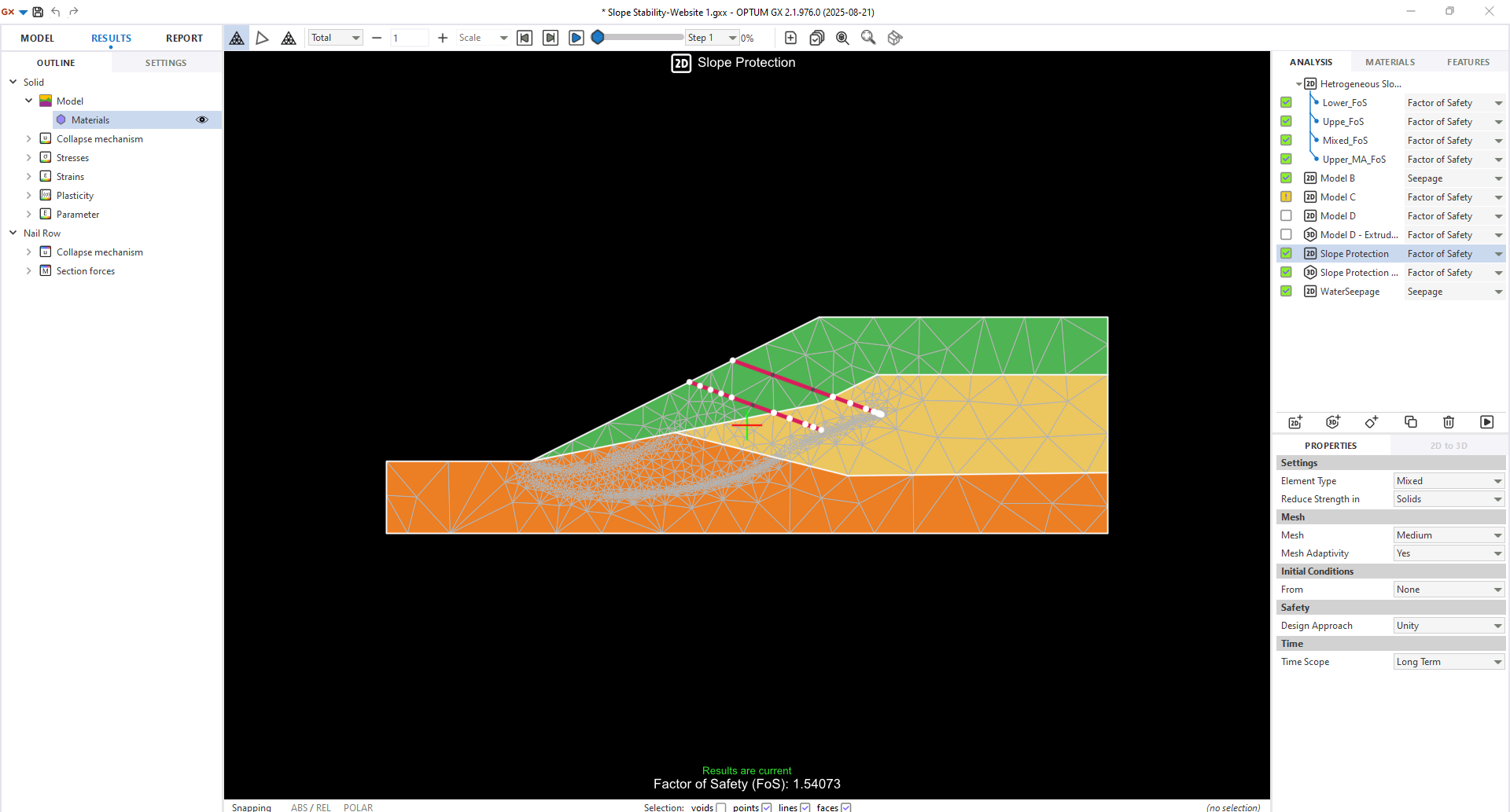
OPTUM GX delivers clear, high-quality visual output to support communication, design validation and regulatory approval. Results can be viewed in 2D and 3D – including cross-sections, failure mechanisms, displacement contours, and safety-factor heatmaps.
Time-series charts track deformation or pore pressure changes throughout staged construction or monitoring periods, making complex behavior easy to follow and present. This ensures results are accurate, verifiable, and ready to support critical design decisions.
Reports are automatically generated in PDF format and include full model documentation, input parameters, and visual results. Each report can be customised to include introductory sections explaining what slope stability analysis is and conclusions outlining why slope stability is important for the project at hand.
Scripting & Workflow Automation
Use Python scripts or custom plugins to automate model setup, run parametric studies, and streamline repetitive engineering tasks across multiple design scenarios.
OPTUM GX and Python
Comprehensive Analysis Methods: Finite Element Limit Analysis (FELA)
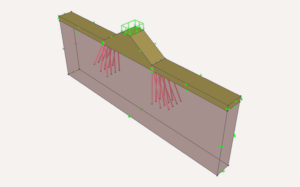
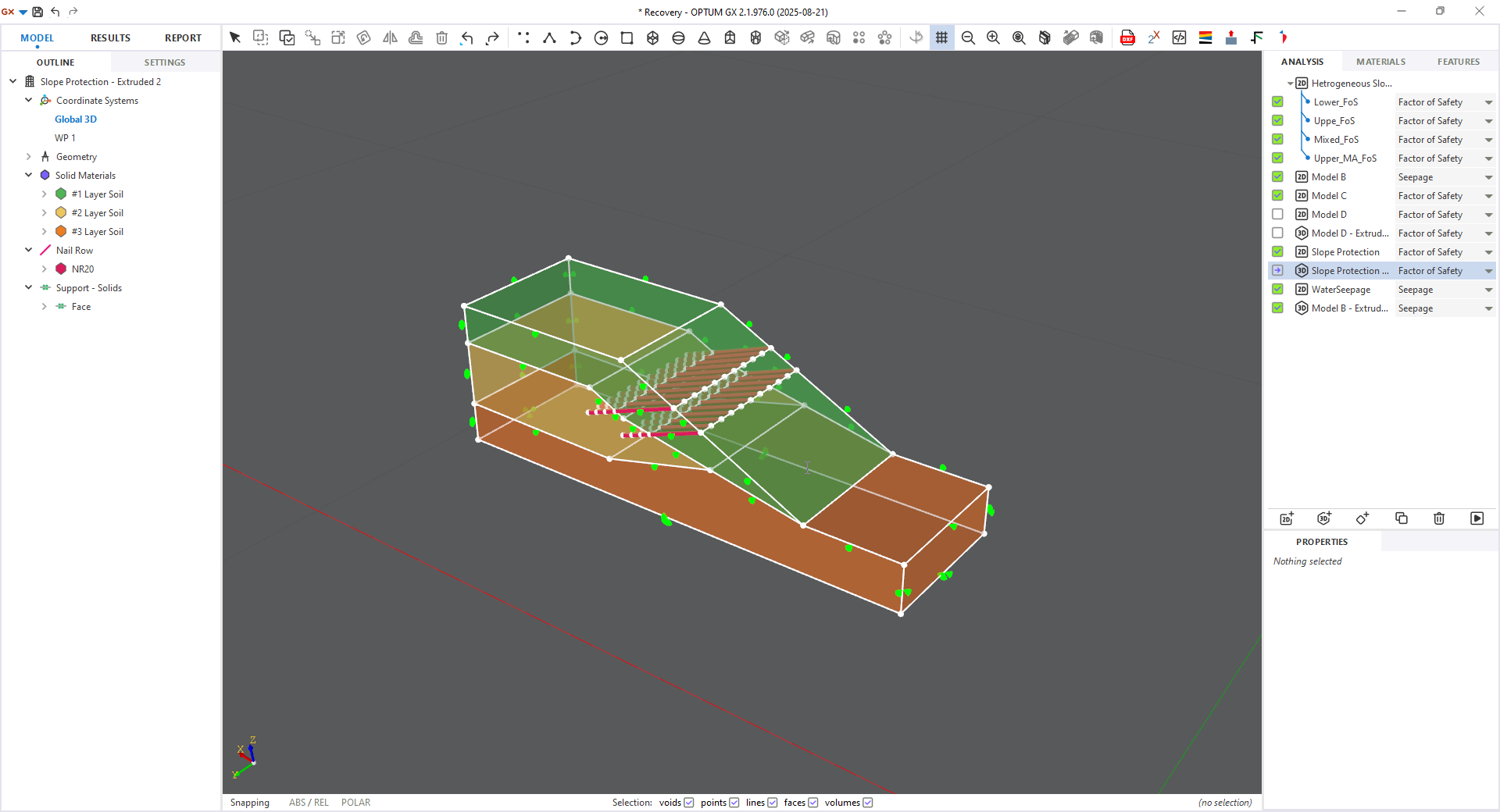
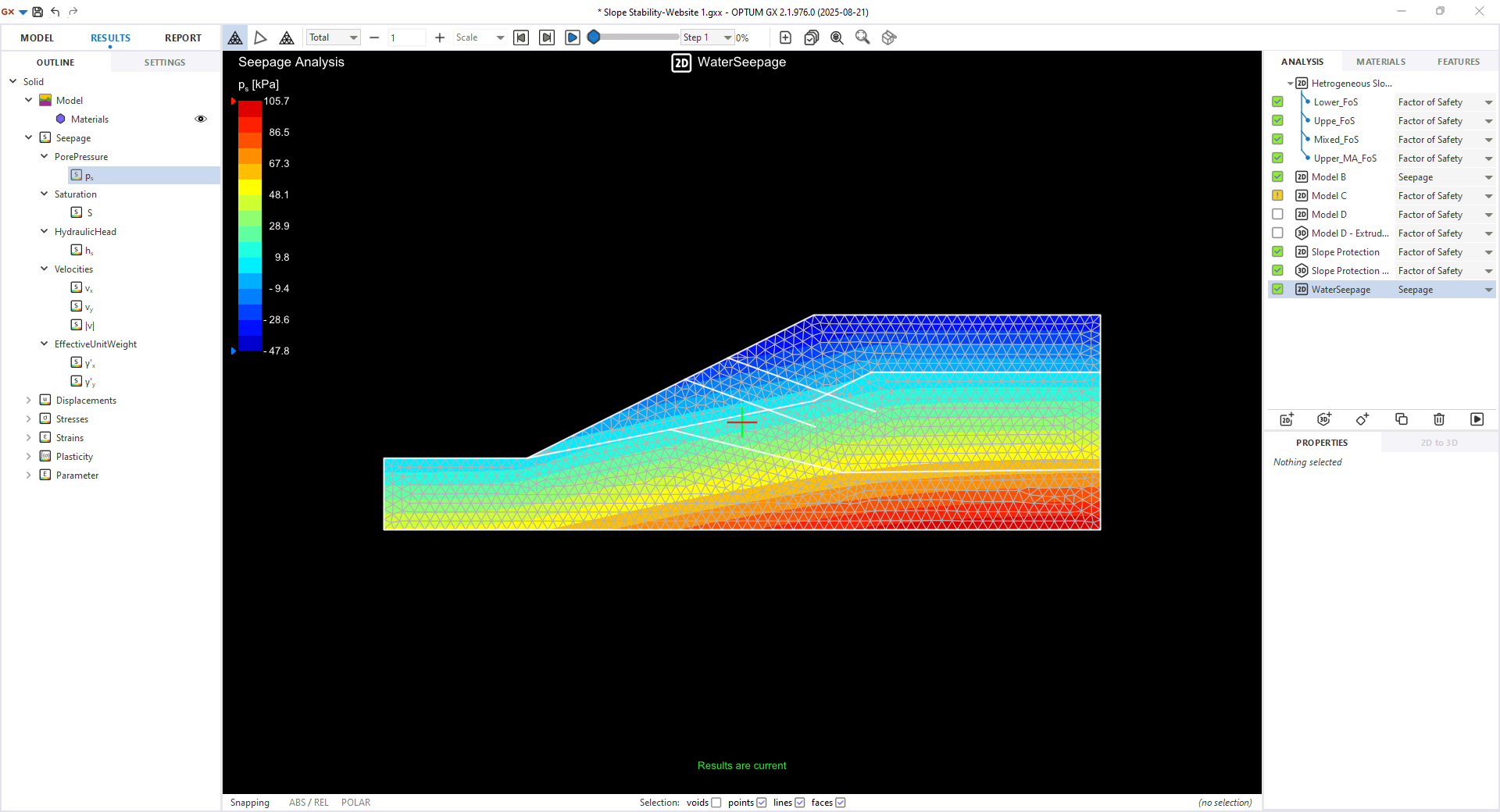
OPTUM GX gives you full control over how to approach soil slope stability analysis – from rapid safety-factor assessments to detailed deformation modelling. In a single platform, you can analyse layered soils, reinforcement and groundwater flow, including transient seepage, without switching tools. Choose the level of detail needed for each project: a quick, targeted limit analysis or a complete deformation model that captures stresses, displacements and pore pressures. This flexibility means you can adapt your workflow to match both project complexity and time constraints, while still relying on the accuracy and robustness of Optum’s proprietary OBFEM solver.
Slope Monitoring & Data Integration
Engineers can integrate monitoring data via Python – for example from inclinometers, piezometers, or groundwater instruments.
This makes it possible to compare field data with finite element predictions, validate analyses, and update assessments over time. In this way, OPTUM GX can complement slope monitoring workflows while providing advanced analysis features such as staged construction, FELA, and transient seepage.


OPTUM GX
Try Our Slope Stability
Analysis Software
Experience the full capabilities of OPTUM GX’s slope stability analysis software – free, with no credit card required.
Click Download Free Trial, complete the short form, install, and start running your own slope stability analysis in just a few minutes.
You’ll get unrestricted access to all features, so you can explore Finite Element Limit Analysis, full deformation modelling, groundwater flow, reinforcement, and more – all powered by Optum’s unique OBFEM solver.
See how easy it is to model complex slope conditions and evaluate fast results with clear, visual outputs.
Download Free Trial
OPTUM GX vs Other Slope Stability Software
OPTUM GX combines advanced OBFEM precision with real-time data integration in one streamlined platform – no extra modules or add-ons required.
Where other slope stability analysis software, such as Rocscience, PLAXIS and GEO5, often relies on multiple tools or manual workflows, OPTUM GX unifies design, staged construction modelling, and monitoring in a single environment.
Automated features – such as load stage definition, transient groundwater modelling, and integrated visual reporting – reduce the need for spreadsheet calculations and repetitive re-modelling.
This means faster turnaround, fewer errors, and a clearer link between design and operational performance – helping you deliver safe, cost-effective solutions with confidence.
Comparison of Geotechnical Calculation Methods: LEM, FEM, and FELA
Handles true collapse load
No need to guess or iterate failure surface
No mesh refinement tuning needed
Upper/Lower bound solution
Accurate for non-circular slip surfaces
Rapid Analysis
Suitable for automation/parametric analysis
Easy for non-expert
LEM
Limited
Limited scripting
Limited
FEM
Approximate
Slow for batch runs
FELA (OPTUM GX)
Frequently ASked Questions
Can’t find what you’re looking for? Contact us here.

Designing and Analyzing Foundations on Hilly Slopes
October 7, 2026
Determination of stability of slopes have been a major challenge Foundations built on or near hilly terrain do not behave like foundations on flat ground. The absence of confining soil...
Geotechnical
OPTUM GX
Advanced Slope Stability Assessment through Reliability Analysis in OPTUM GX
August 4, 2026
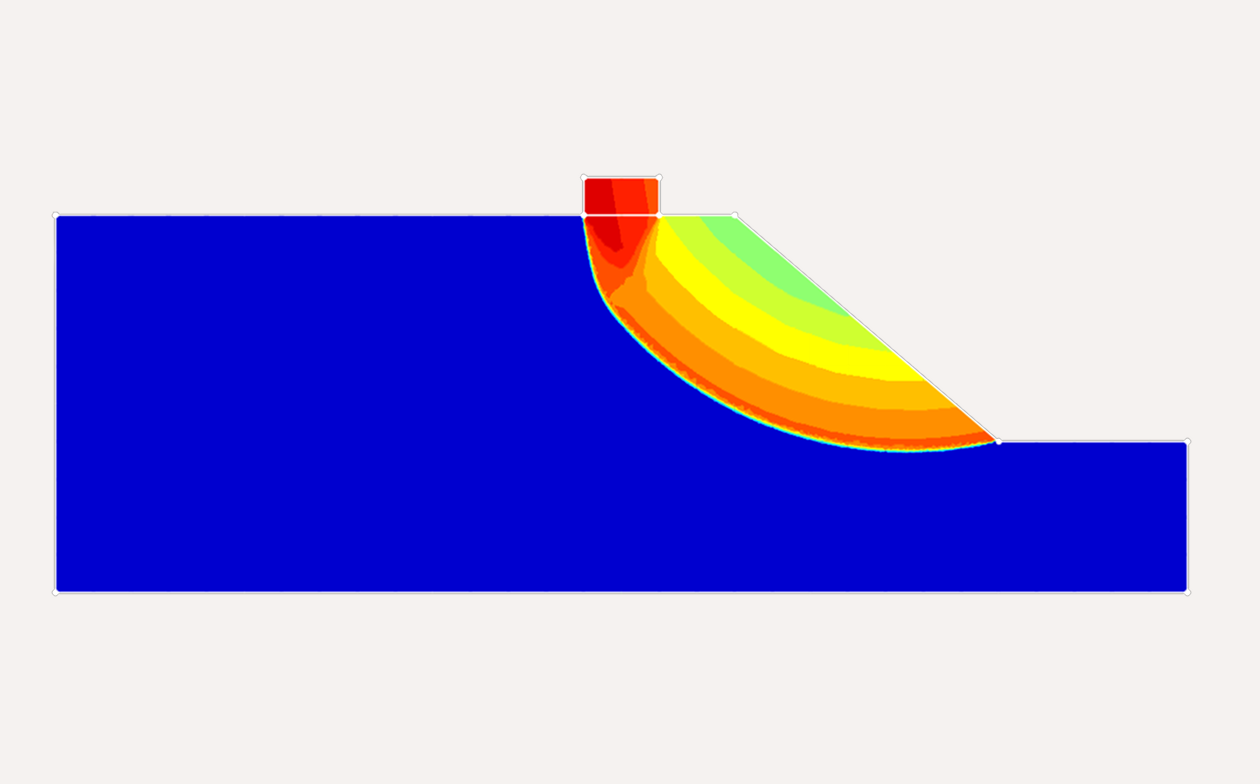
Determination of stability of slopes have been a major challenge in geotechnical engineering. Slopes that pass through the rigours analysis often fail due to several on-site uncertainties making it a...
Geotechnical
OPTUM GX
What is Finite Element Analysis?
February 3, 2026
Finite element analysis (FEA) is a numerical method that breaks a complex structure into many small “elements” to predict how it responds to loads, deformation, temperature changes and other physical...
FEA
Finite element analysis
Geotechnical
OPTUM GX