Since the first Olsen Gang film in 1968, Vridsløselille in Albertslund has been a place of ambitious plans. Back then, Egon Olsen sat behind the prison walls, devising his supposedly foolproof schemes. Today, the setting is the same — but the plans are very different.
On the former prison site, a modern masterplan is now unfolding. The first residential neighbourhood, Skydebanen, is taking shape, with six buildings comprising 165 apartments across 12,500 square metres. This very project became the catalyst for developing an automated model transfer from StruSoft’s FEM-Design to OPTUM CS (Concrete Solutions) — a solution that made what initially seemed impossible achievable through close collaboration between Spæncom, Sweco, and Optum Computational Engineering.
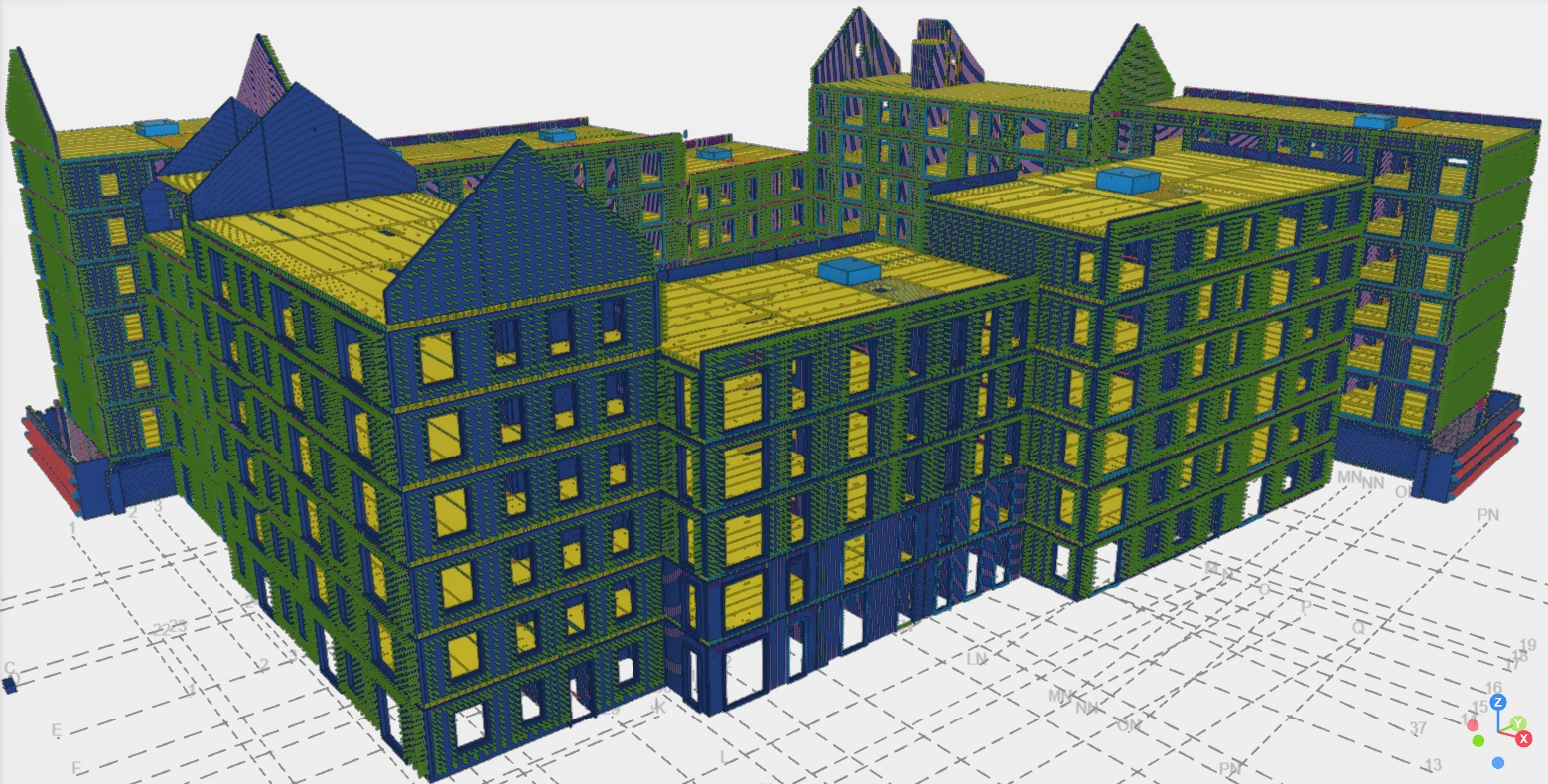
The first residential block in the Vridsløselille project
When the Project Hit a (Concrete) Wall
For the Vridsløselille project, the precast concrete supplier Spæncom was responsible for delivering external walls with wall ties, internal concrete walls, and hollow-core slabs. While the project was still in its early stages, it quickly became clear to Danny S. Hansen, Structural Engineer at Spæncom, that the task could not be solved manually.
The sheer number of loads and load combinations that needed to be transferred from Sweco’s FEM-Design model to OPTUM CS was simply overwhelming. On a single facade wall alone, more than 1,500 individual load actions were present.
Manually transferring these loads from Sweco’s FEM-Design model (StruSoft) into Spæncom’s structural design software, OPTUM CS, would not only have been extremely time-consuming and error-prone — in practice, it would have been impossible.
“It was hopeless. We would never have reached the finish line that way,” says Danny S. Hansen.
But as is often the case when you hit a wall, you find another way around it.
What initially appeared to be an unsolvable challenge instead became the starting point for an innovative solution developed in close collaboration between Spæncom, Sweco, and Optum.
Read more about our concrete solution
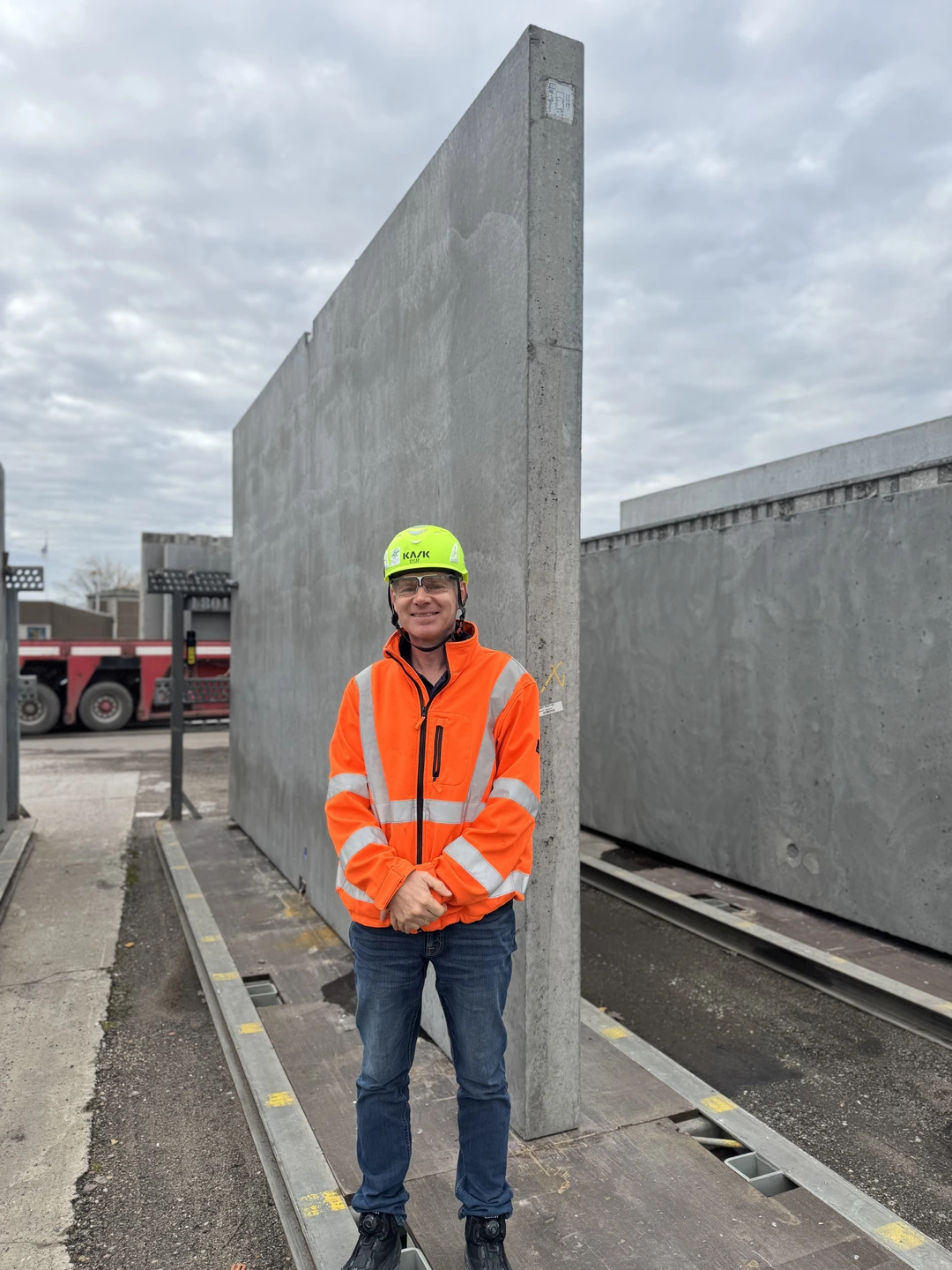
Danny S. Hansen, Structural Engineer at Spæncom, at the precast concrete plant in Kolding.
Python Became the Way Forward
A method was needed to translate Sweco’s struXML files into OPTUM CS — without any manual data entry. The solution was a custom-developed Python script from Optum, capable of automatically converting the consultant’s model directly into a complete OPTUM CS model.
And the results were significant.
“It was quite remarkable. Suddenly, we were given a fully built model almost for free,” Danny explains. “Geometry, walls, openings, loads, and load combinations — everything came across.”
Before conversion, the necessary eccentricities must be defined, as these always depend on wall thickness, orientation, and load type.
“I enter the eccentricities manually in the Python script. That’s why it’s essential that the consultant builds the model carefully and is consistent in how loads are named and applied. This is a prerequisite for a smooth conversion. But the entire process worked extremely well with Sweco,” he says.
Once the file has been converted into an OPTUM CS model, Danny defines the perpendicular loads such as earth pressure and wind, as well as reinforcement layouts and concrete material properties.
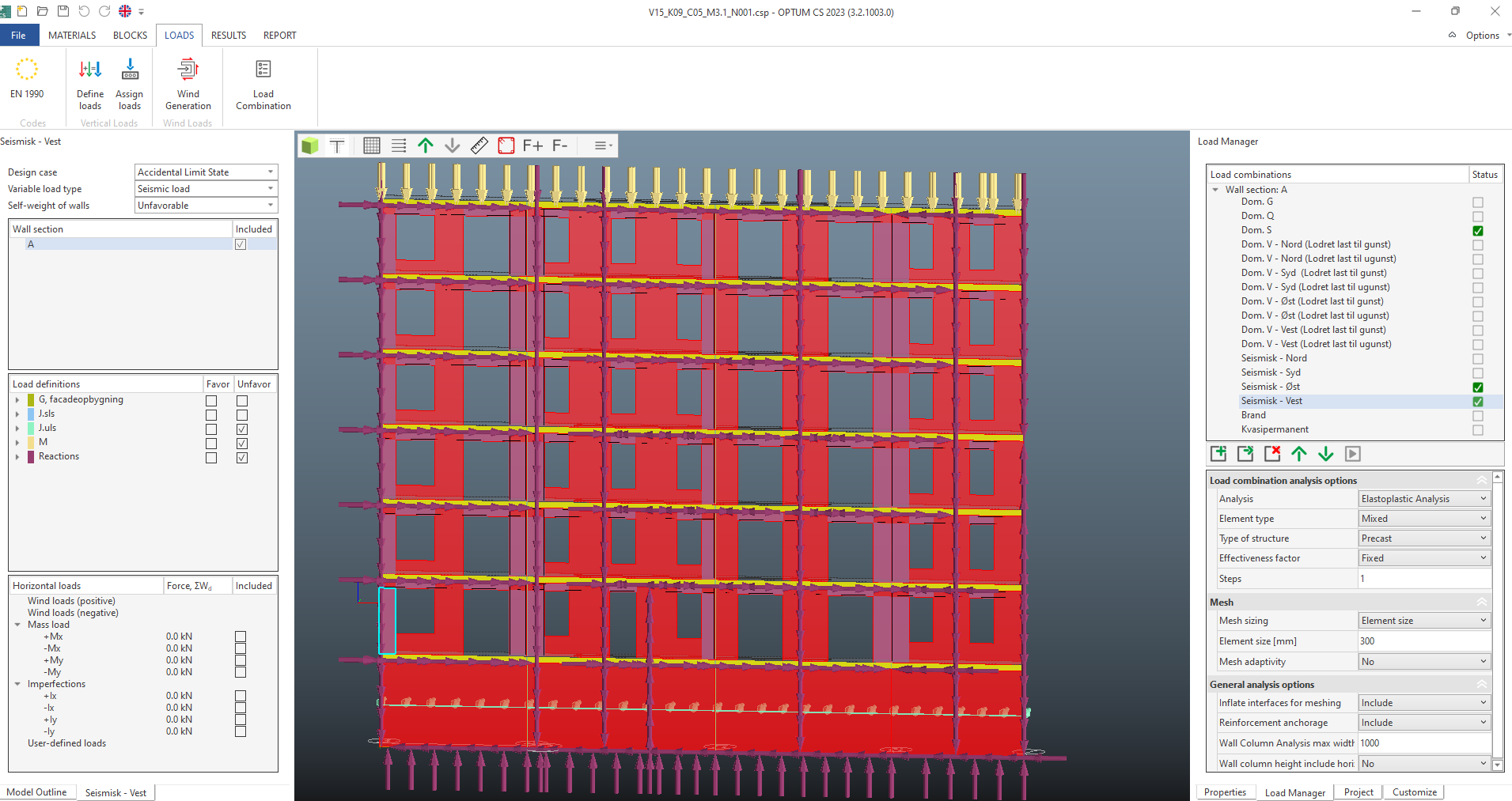
Wall elevation in OPTUM CS with applied loads
Far More Efficient — and More Sustainable
With automatic conversion, Spæncom avoids the time-consuming task of rebuilding calculation models from scratch:

Creating geometry, including openings and joints
Handling complex load combinations
Maintaining interfaces to foundations and other structural elements
All of this is transferred directly into OPTUM CS.
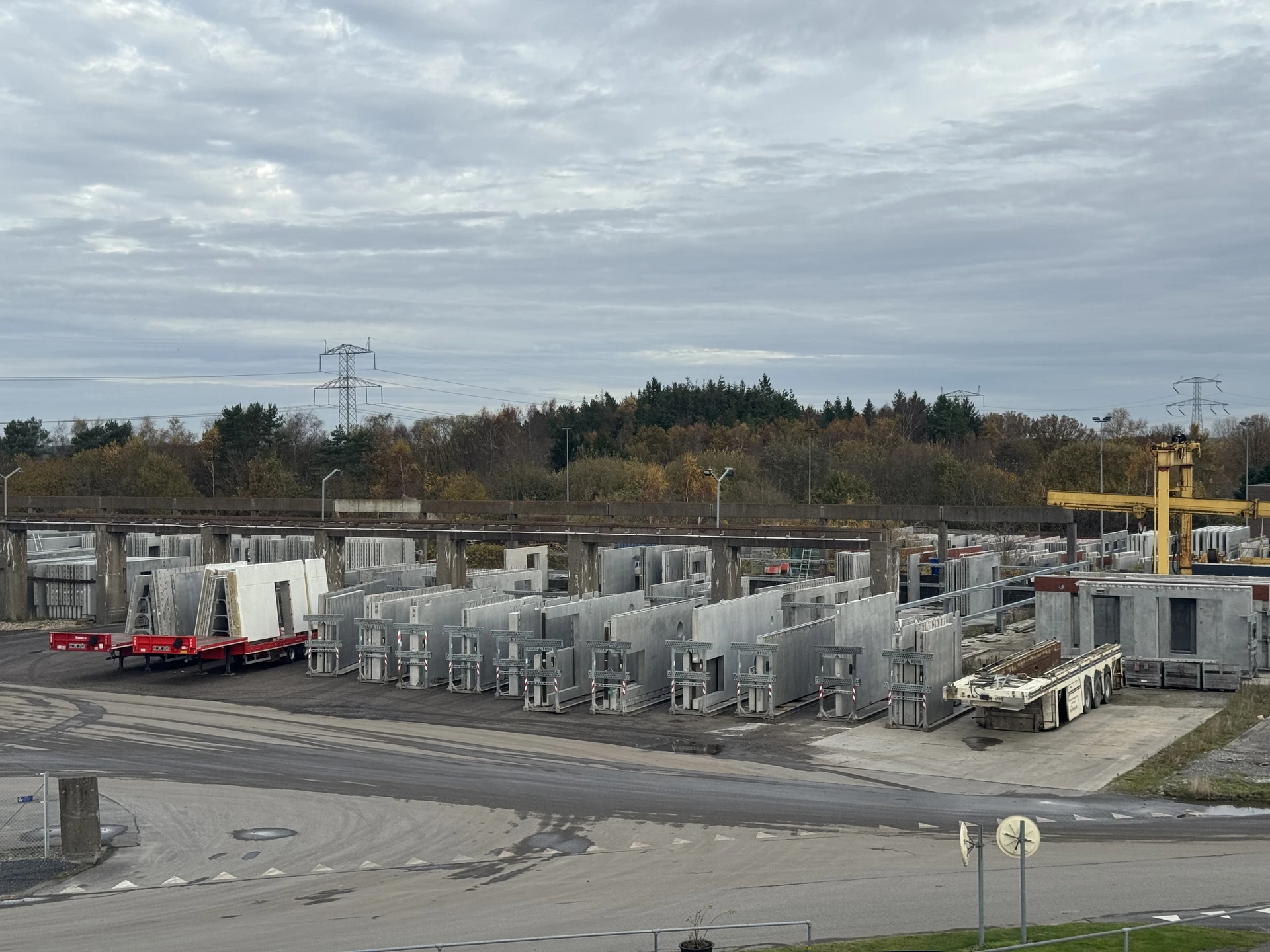
Finished precast concrete elements from Spæncom’s factory in Kolding
“It’s really smart, because geometry is clearly what takes the longest. Typically, 50% of the design time is spent manually building the model,” says Danny. “With the script, we can complete the structural analysis in half the time.”
At the same time, the method provides a more sustainable design basis:
“When we continue working directly from the consultant’s model, we avoid both unnecessary safety margins and over-reinforcement,” Danny explains.
The OPTUM CS model precisely reflects what the consultant has analysed — and the risk of misinterpretation when transferring data between two FEM tools is eliminated.

It’s really smart, because geometry is clearly what takes the longest. Typically, 50% of the design time is spent manually building the model. With the script, we can complete the structural analysis in half the time.
Danny S. Hansen
Structural Engineer at Spæncom
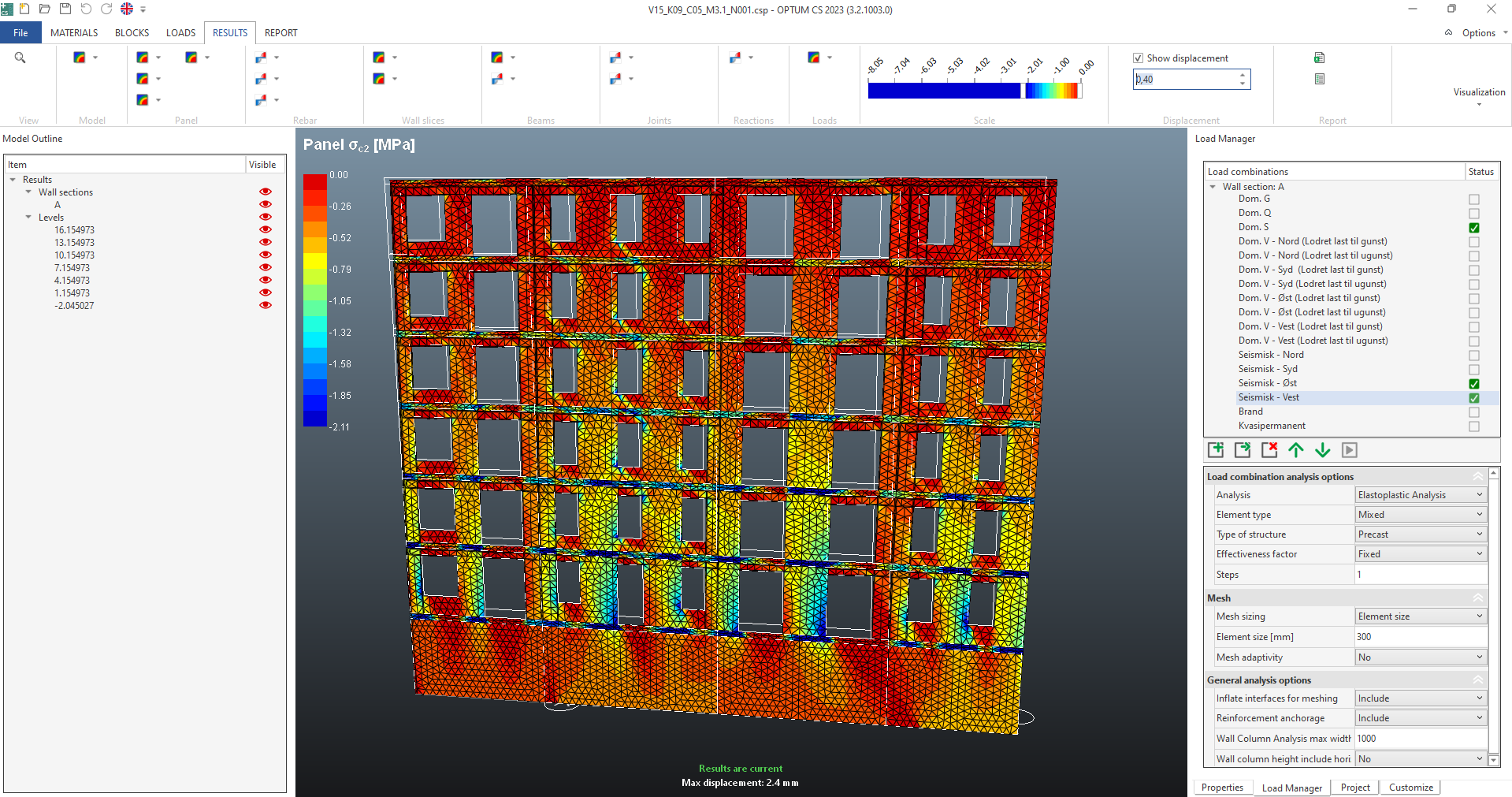
Wall elevation in OPTUM CS after analysis with calculated concrete stresses
A Digital Breakthrough for Concrete Design
The wall the project initially hit instead became a digital springboard toward a far more efficient design workflow.
The experience from Vridsløselille demonstrates the significant benefits gained by removing manual intermediate steps between consultant and precast element supplier. When the consultant’s model can be reused directly in OPTUM CS, one of the most time-consuming and error-prone phases of structural design disappears.
Automation not only accelerates the calculation process — it also makes it easier to keep schedules on track and bring construction activities forward, benefiting consultants, contractors, and clients alike.
With faster workflows and fewer potential errors, a strong foundation has been laid for future projects at Spæncom and with their partners.
Spæncom uses OPTUM CS as their primary tool for concrete structural design. As a result, consultants — who are often responsible for the global structural analysis — can benefit from exactly the same advantages:
Material savings
OPTUM CS typically reduces concrete and reinforcement consumption by more than 30%
Time savings
Less manual model building and automated reporting free up time for real engineering work and optimisation
Safety and transparency
Eurocode-compliant calculation engine with automated documentation
More sustainable design
Optimised structures reduce material use and CO₂ footprint
What Could Automation Mean for Your Design Workflow?
Whether you carry out the global structural analysis in-house, work closely with precast suppliers, or want to explore your automation potential, we are happy to help you:
Identify time savings in your current workflow
Clarify opportunities for optimising concrete and reinforcement
Demonstrate how OPTUM CS can strengthen both design and documentation
👉 Contact us for a no-obligation walkthrough — and see how automation can strengthen your design process, project economics, and schedules.
Contact us

Spæncom Slashes Design Time with Automation in OPTUM CS
January 6, 2026
Since the first Olsen Gang film in 1968, Vridsløselille in Albertslund has been a place of ambitious plans. Back then, Egon Olsen sat behind the prison walls, devising his supposedly...
Automation
Concrete
Numerical modelling
OPTUM CS
Python

Sweco Saves Time with Optum
November 3, 2025
As one of Europe’s largest architecture and engineering consultancies, Sweco’s 22,000 specialists handle complex infrastructure projects across the continent. With Optum, their engineers can calculate faster – freeing up more...
Foundations
Geotechnical
Infrastructure
load transfer
Numerical modelling
OPTUM G2
Slope stability
WSP: When Soil Meets Concrete
September 9, 2025
WSP uses Optum to model the complex interaction between soil and concrete — ensuring safe, realistic designs for deep excavations and stormwater basins....
Deformation
Excavations
Geotechnical
Numerical modelling
Retaining wall
Soil-structure interaction