Seepage Analysis Software | Modeling Groundwater Flow with Optum GX
Understanding Seepage in Soil and Structures
Seepage is one of the most critical challenges in geotechnical engineering. Uncontrolled groundwater flow through soil and structures can increase in excessive pore pressures, reduction in effective stress, and, in severe cases, failure of dams, slopes, foundations, and retaining walls.
In earth dams, seepage may lead to internal erosion and piping; in foundations, it can create uplift pressures and reduce bearing capacity; and in slopes, changes in moisture content can drastically reduce stability.
To mitigate these risks, engineers must understand how water moves through saturated and unsaturated zones, how the phreatic line develops over time, and how fluctuations in groundwater levels affect structural safety.
With numerical seepage analysis in OPTUM GX, engineers can model these mechanisms under both steady-state and transient conditions — gaining deeper insight into hydraulic behavior and its impact on geotechnical stability.
What Is Seepage Analysis?
Seepage analysis is the study of how groundwater moves through soil and interacts with geotechnical structures.
It describes the flow of water in both saturated and unsaturated zones, the development of pore pressures, and the position of the phreatic line — all of which directly influence effective stress and stability.
In geotechnical engineering, seepage analysis forms the basis for evaluating uplift, internal erosion, hydraulic gradients, and the reduction of shear strength due to elevated pore pressures. Traditional methods rely on flow nets and simplified analytical solutions, while modern finite element approaches allow engineers to model complex geometries, layered soil profiles, and time-dependent hydraulic conditions.
A correct seepage analysis is essential for the safe design of earth dams, embankments, slopes, foundations, and retaining structures.
Read more about soil modelling software
KEY FEATURES IN OPTUM GX FOR RETAINING WALL DESIGN

Numerical Seepage Analysis with OPTUM GX
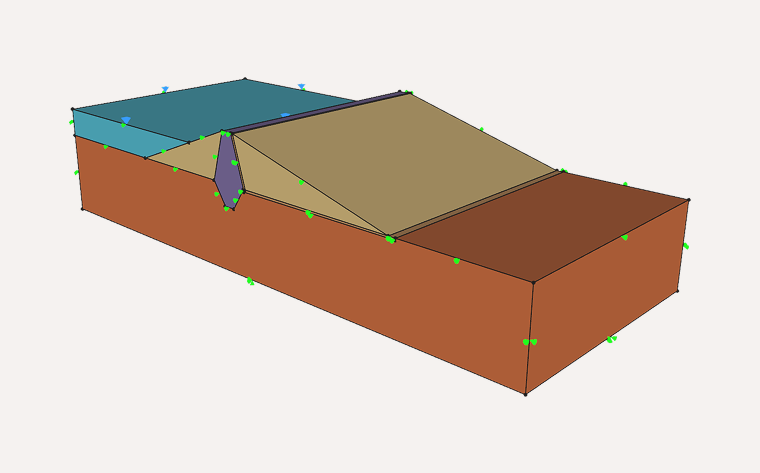
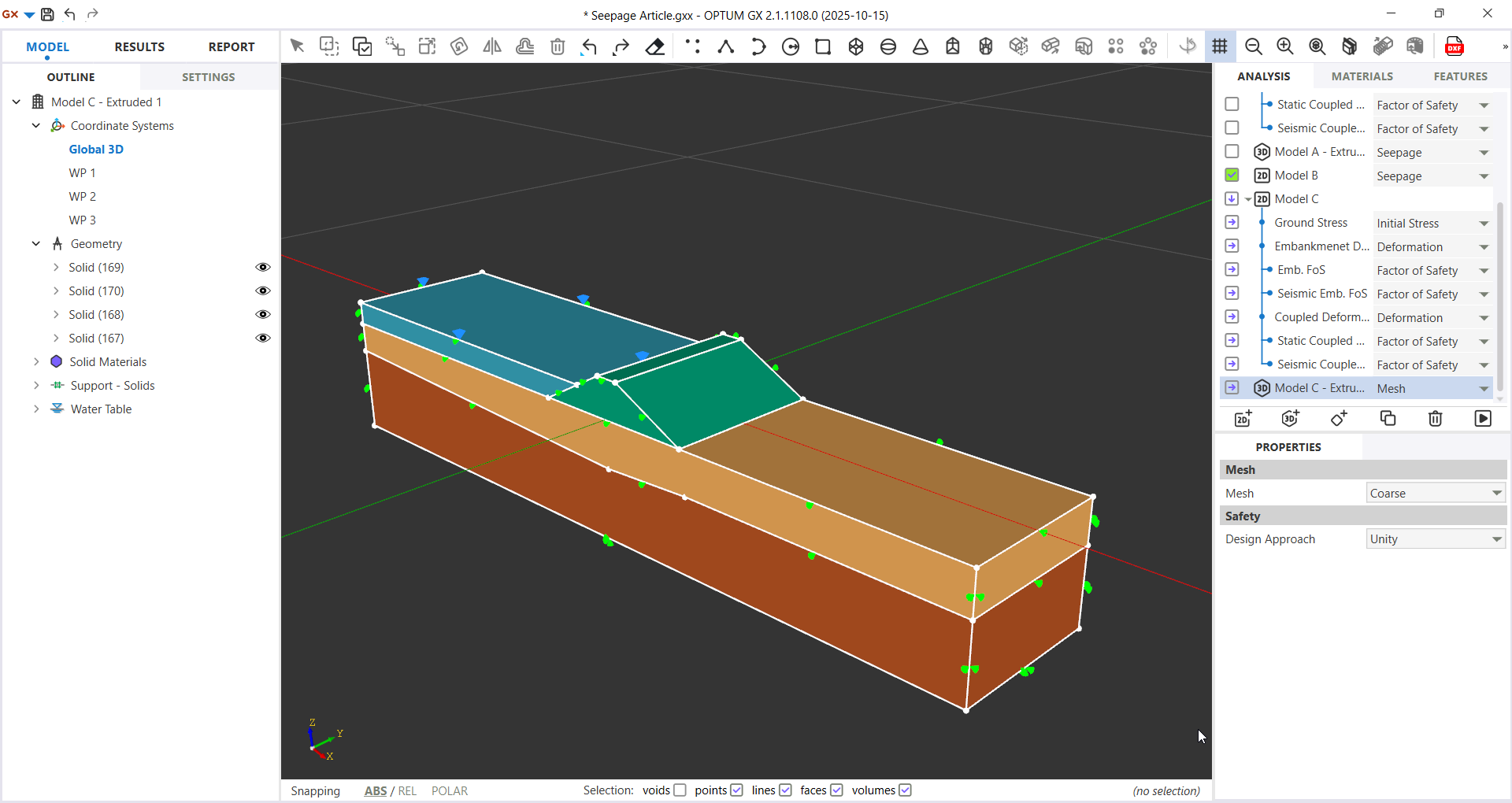
OPTUM GX is an advanced finite element software for geotechnical analysis that enables both steady-state and transient seepage modeling.
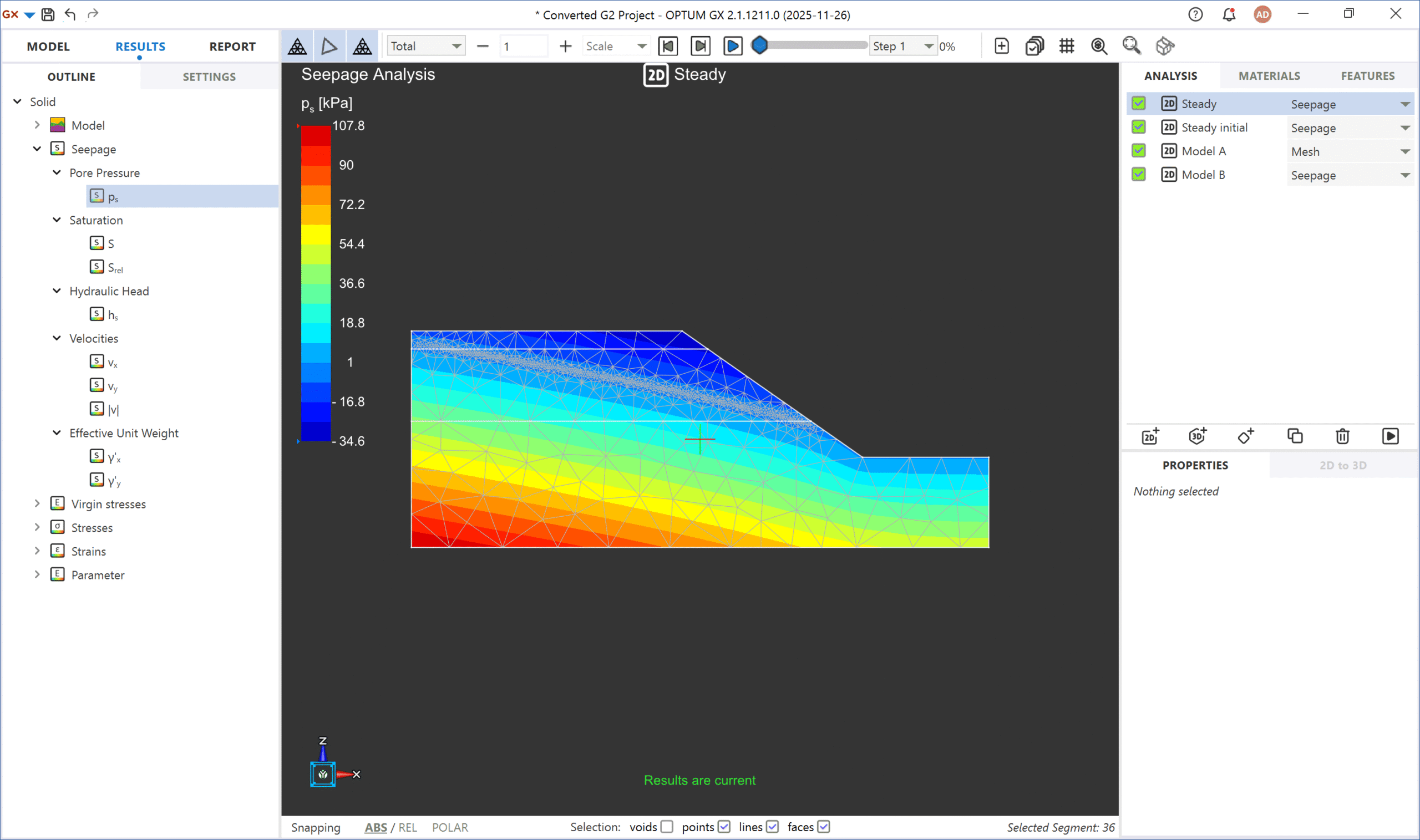
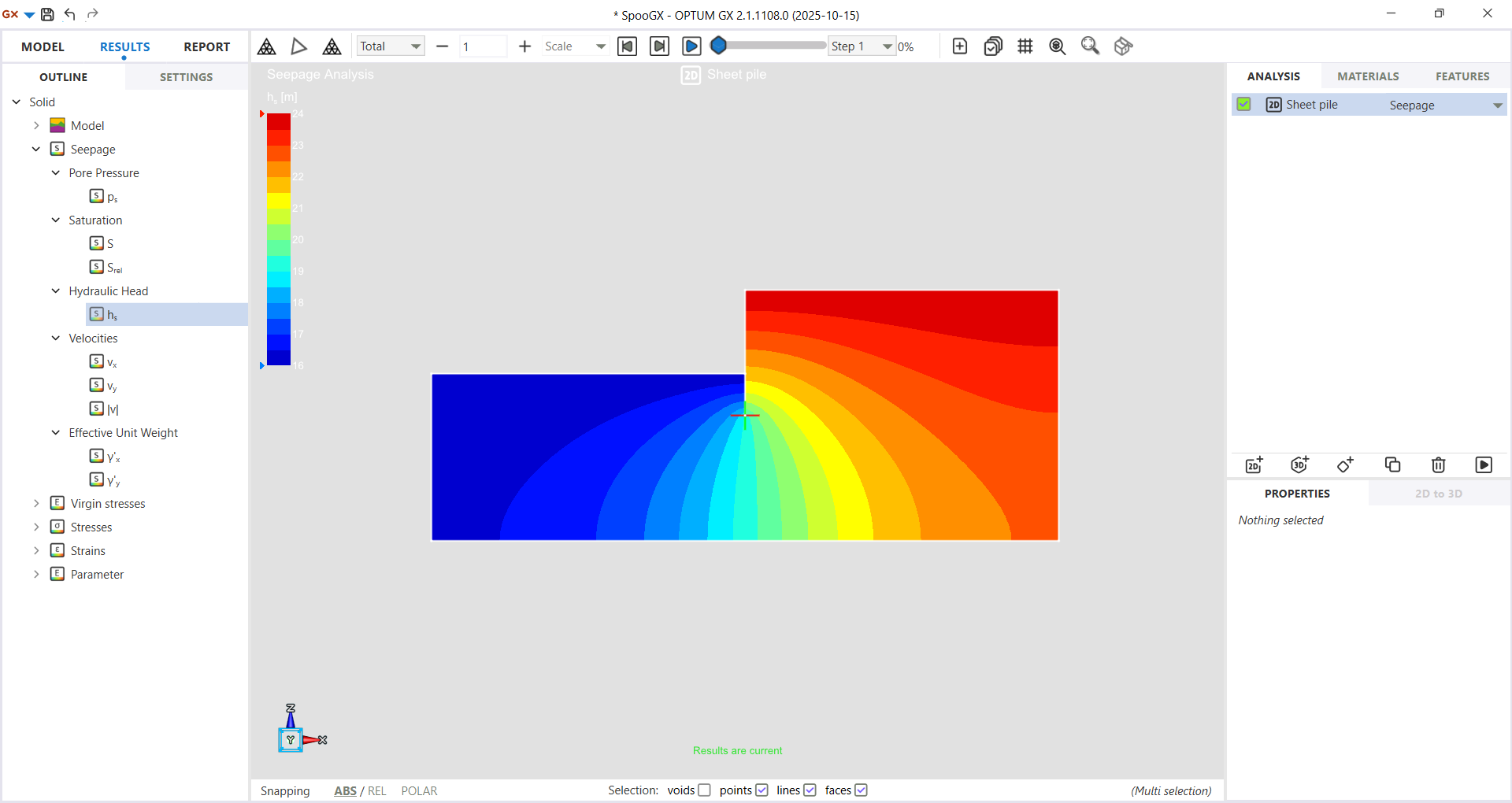
By simulating groundwater flow through soil and structures, engineers can accurately evaluate pore pressure, total head, seepage quantity, and saturation conditions.
The software handles homogeneous and layered soil profiles, and seepage results can be directly combined with stability analyses to assess how seepage affects the safety of slopes, embankments, and foundations.
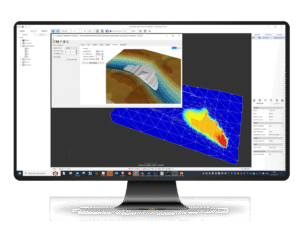
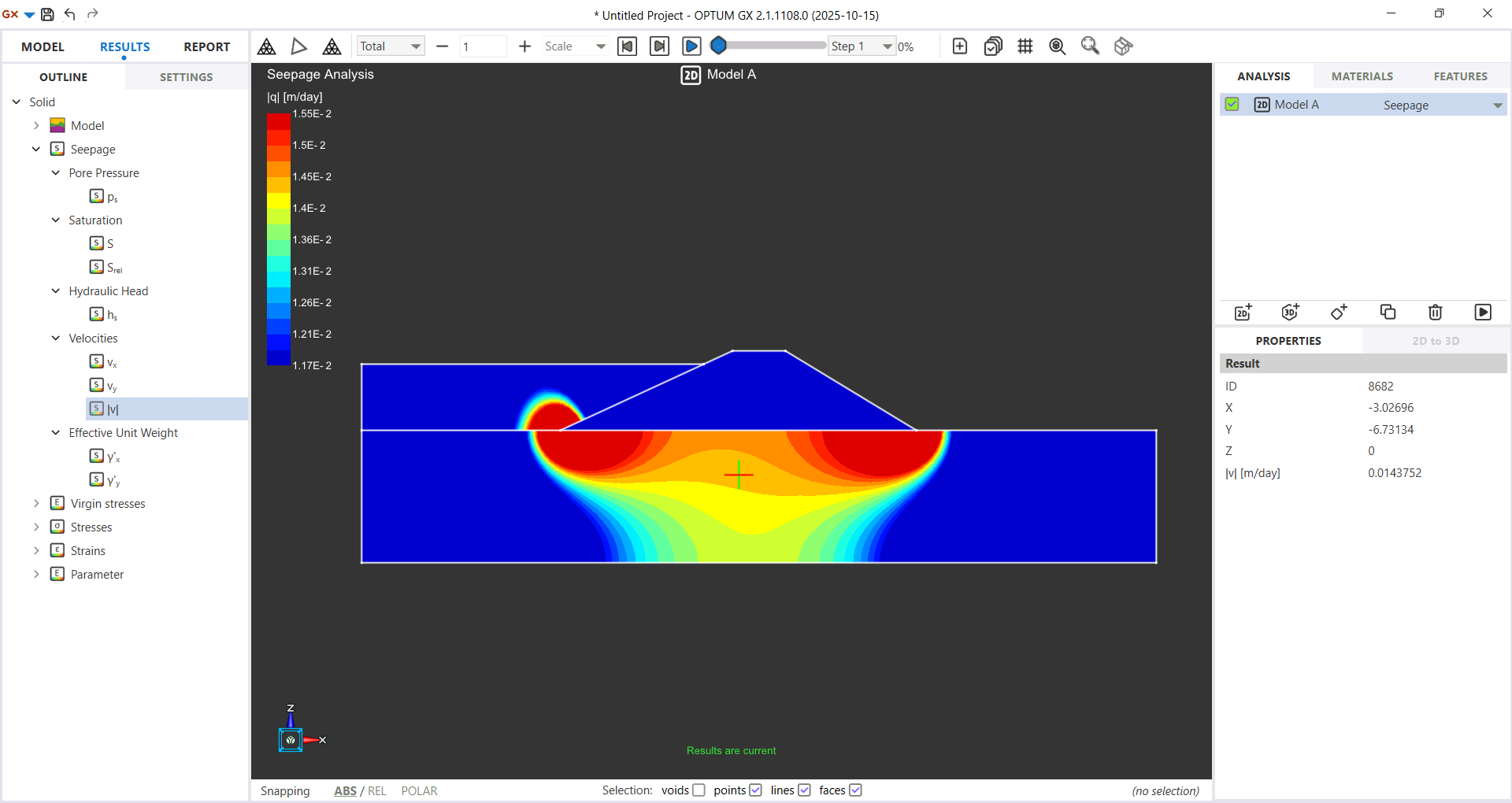
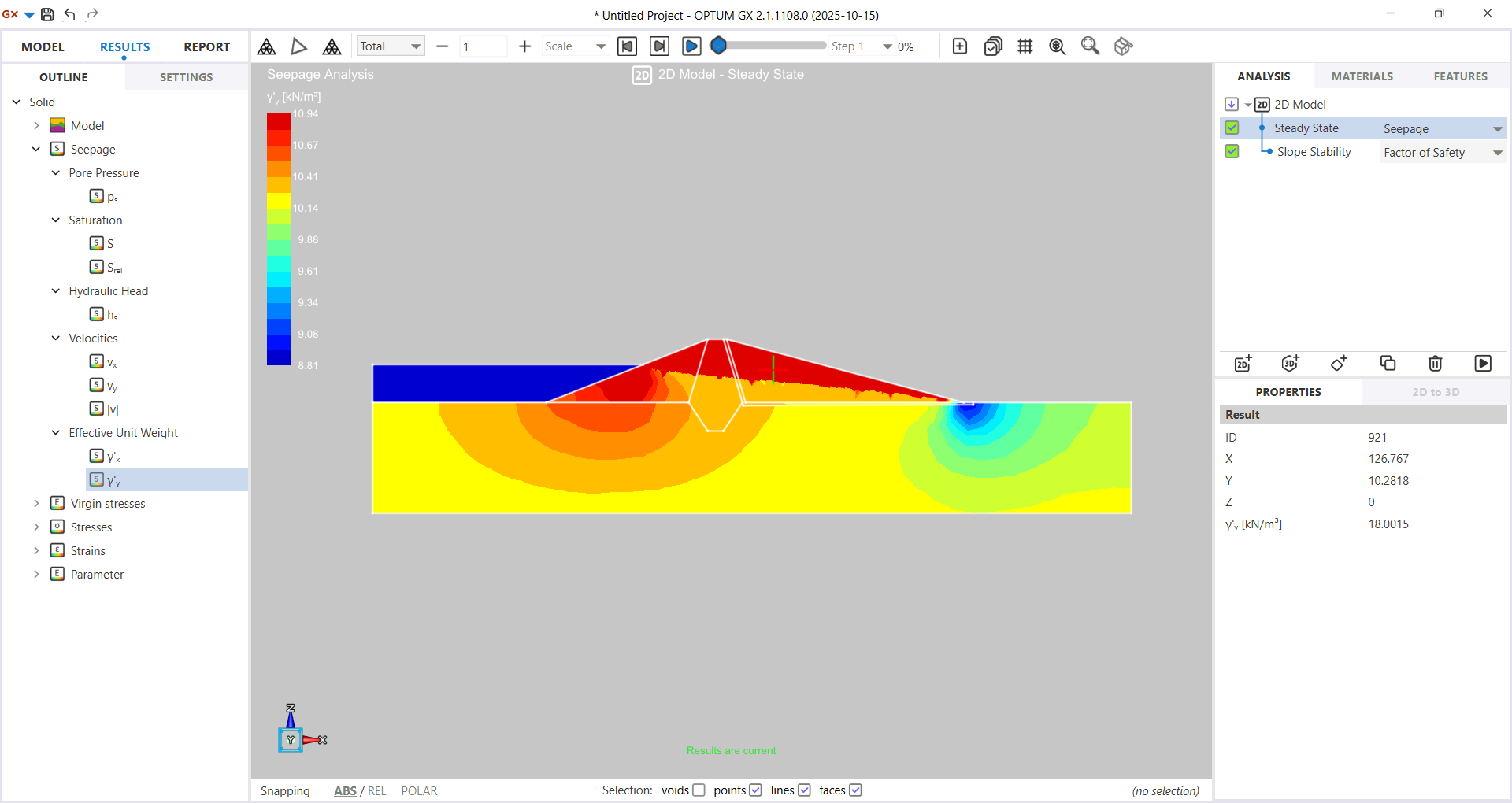
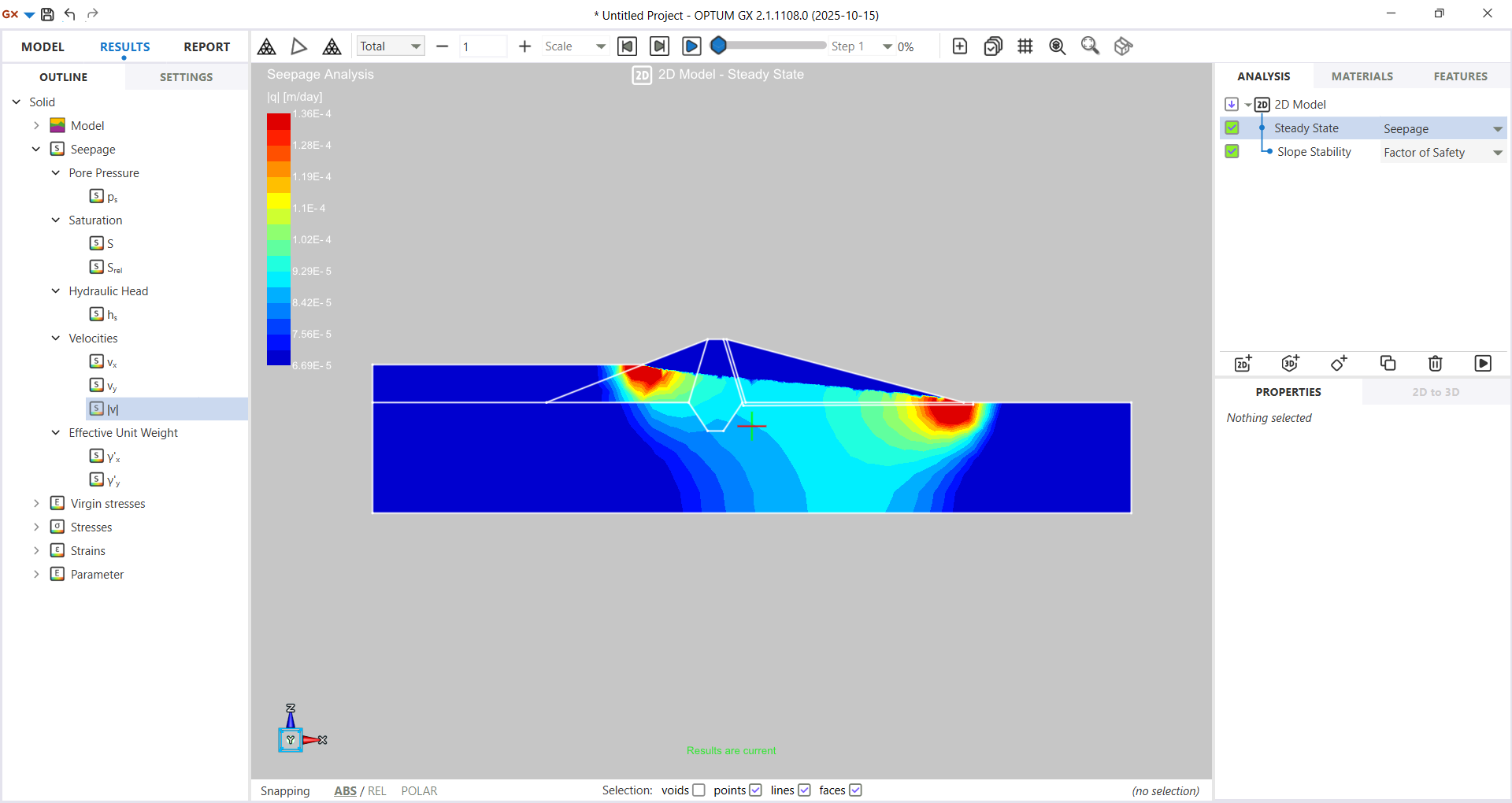
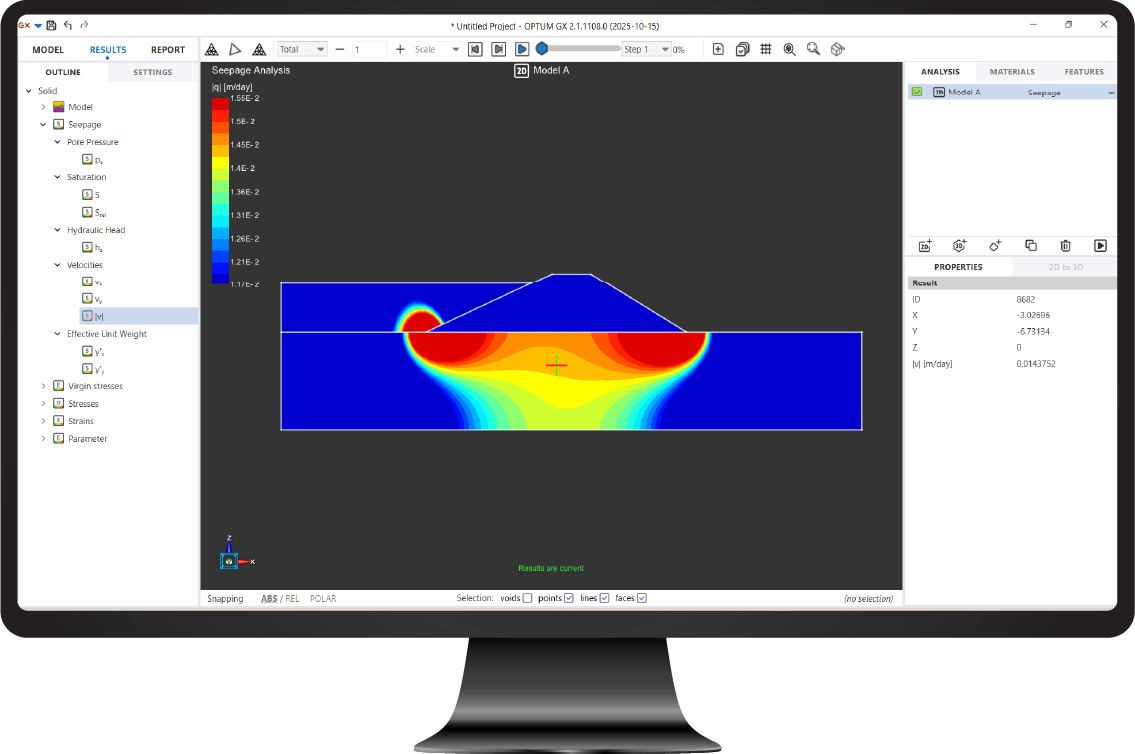
Visual outputs for phreatic line, flow paths, and pore pressure distribution provide a detailed understanding of hydraulic behavior within the model.
Modeling Steady-State Seepage: Long-Term Flow Conditions
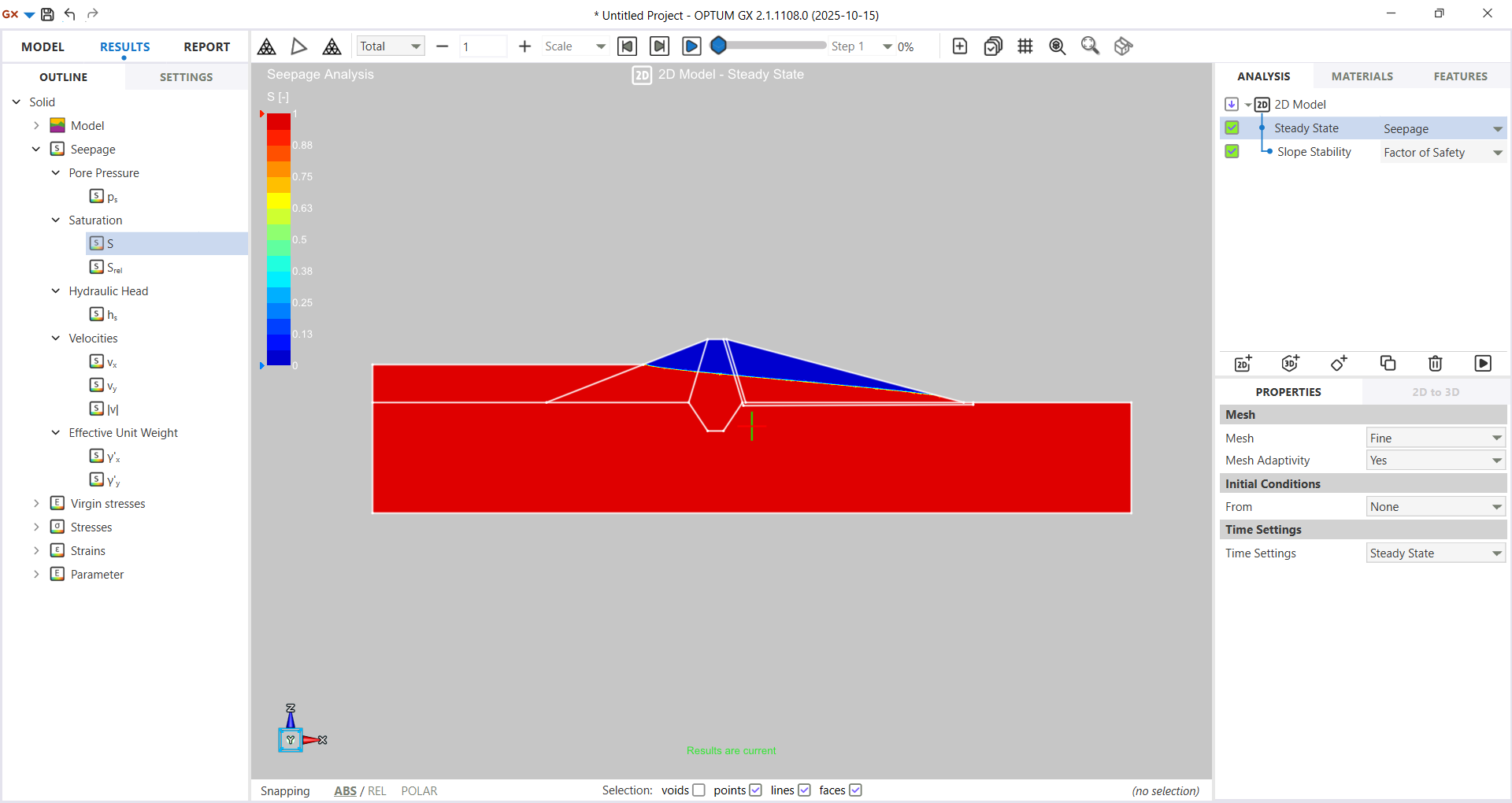
A steady-state seepage analysis describes equilibrium conditions where groundwater flow remains constant over time.
This type of analysis is typically applied to long-term seepage through embankments, earth dams, and foundations. Examples include:
 Continuous seepage through earth structures
- Calculation of uplift pressure beneath hydraulic structures
- Prediction of the phreatic line in homogeneous or layered soils
- Long-term infiltration beneath foundations or barriers
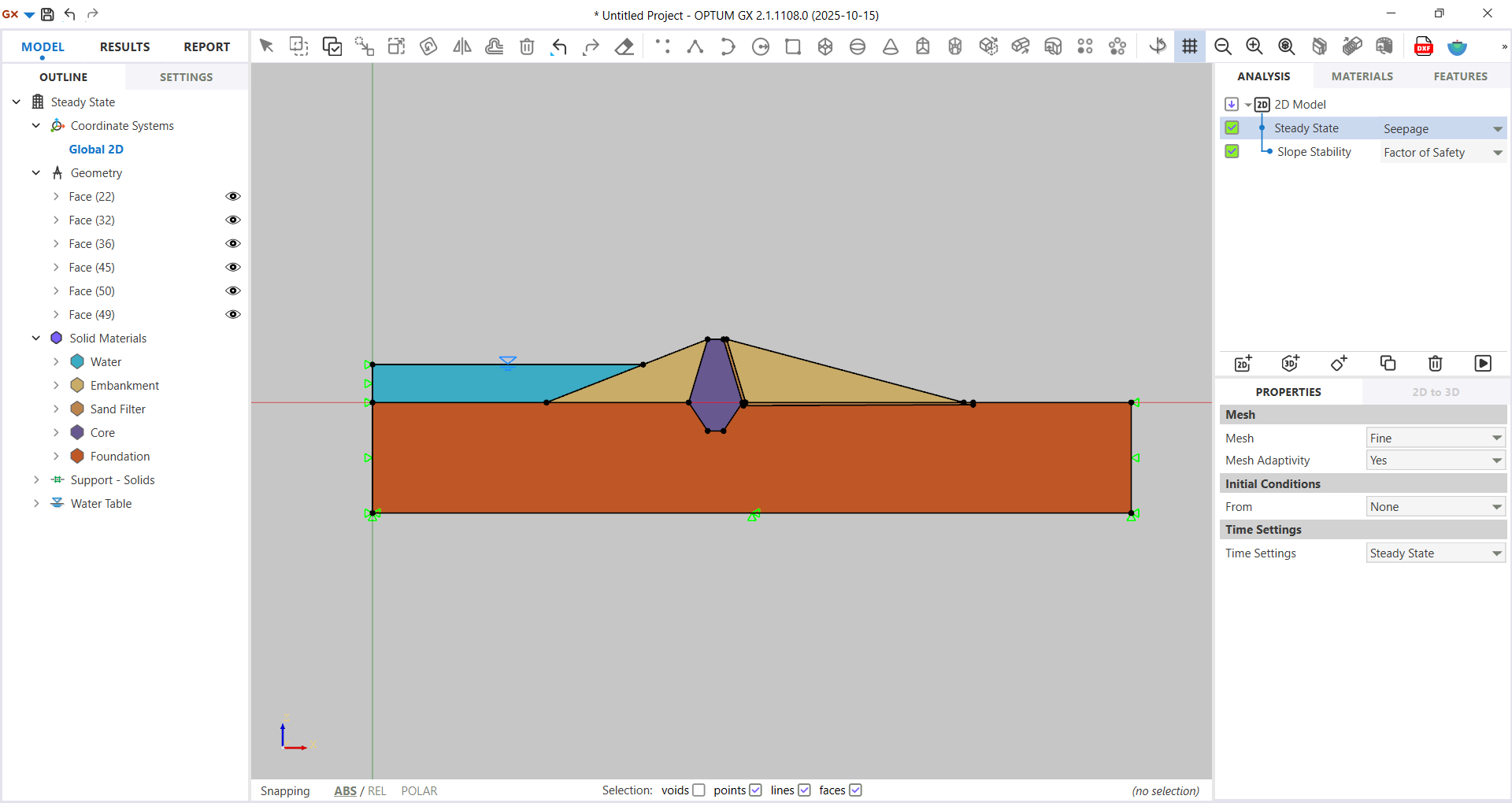
In OPTUM GX, steady-state seepage is solved as a potential flow problem under defined boundary conditions. The resulting pore pressure field can then be integrated into slope or foundation stability analyses to assess how effective stress and unit weight vary due to saturation.
Seepage Analysis in Soil Mechanics
In soil mechanics, seepage plays a central role in understanding how water flow affects stresses, deformation, and long-term stability.
Seepage reduces effective stress, alters shear strength, and can trigger hydraulic gradients that lead to internal erosion or piping. In fine-grained soils, seepage also influences consolidation and the dissipation of excess pore pressures over time.
Finite element seepage analysis provides a more accurate representation of these mechanisms compared with traditional flow nets. By modelling hydraulic conductivity, anisotropy, boundary conditions, and soil layering, engineers can examine how water moves through a soil mass and how pore pressures evolve.
In Optum GX, seepage analysis in soil mechanics can be integrated directly with deformation and stability analyses, giving engineers a clearer picture of how hydraulic conditions govern structural performance.
Modeling Transient Seepage: Time-Dependent Flow and Pore Pressure Changes
A transient seepage analysis accounts for variations in flow and pore pressure over time. This is essential in scenarios such as:
- Rapid drawdown in reservoirs or dams
- Fluctuating groundwater levels around foundations
- Rainfall infiltration and changing saturation in slopes
- Time-dependent loading or drainage conditions
In OPTUM GX, steady-state seepage is solved as a potential flow problem under defined boundary conditions. The resulting pore pressure field can then be integrated into slope or foundation stability analyses to assess how effective stress and unit weight vary due to saturation.
Seepage Analysis for Two-Dimensional Flow
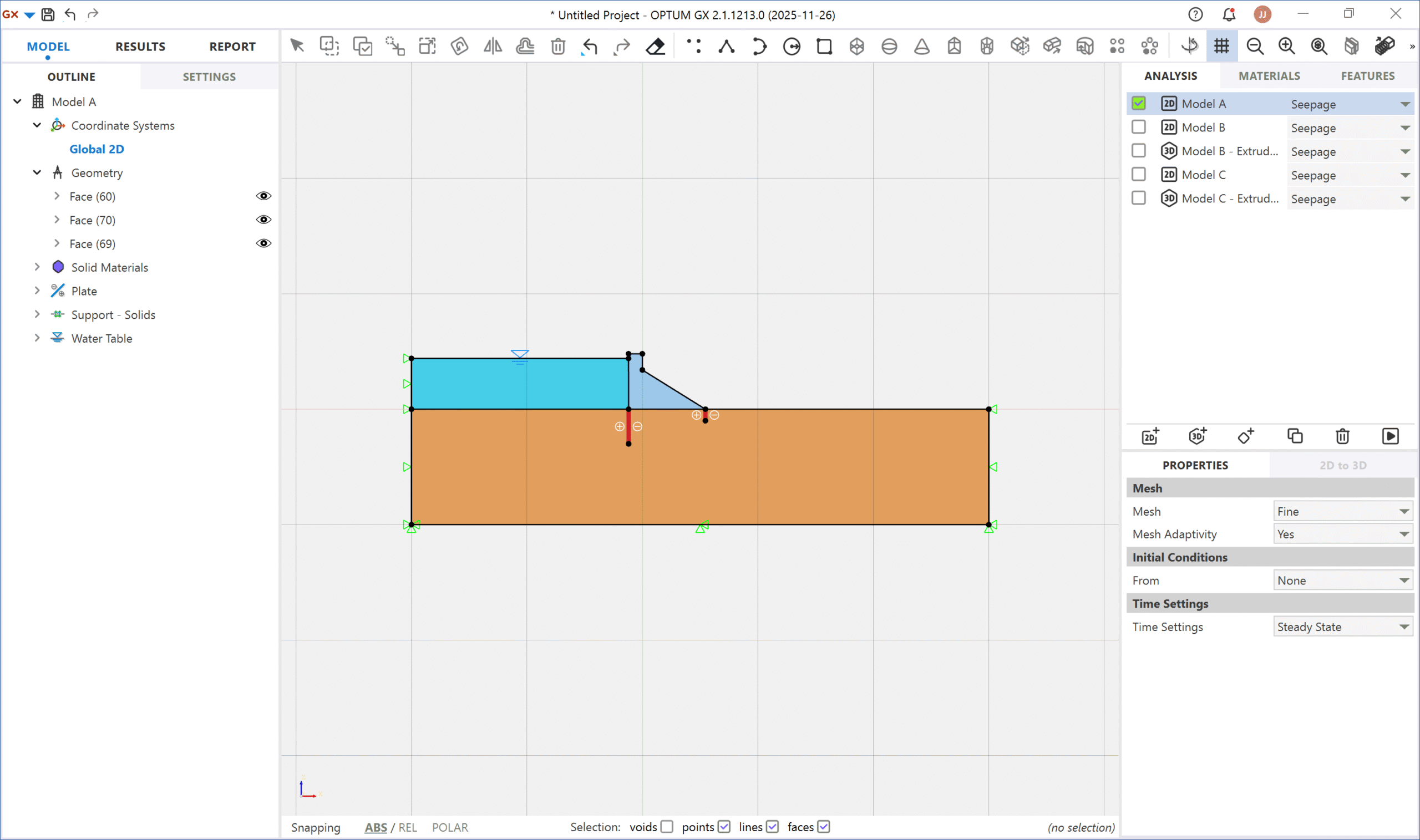
Two-dimensional seepage analysis is widely used in geotechnical engineering to evaluate groundwater flow in embankments, earth dams, slopes, and foundations.
In 2D flow, the problem is typically formulated under plane-strain conditions, allowing engineers to compute pore pressure fields, phreatic lines, seepage quantity, and hydraulic gradients through a vertical section.
Optum GX solves 2D seepage using finite element potential-flow theory for steady-state conditions, and a transient formulation for time-dependent behaviour. These analyses are particularly useful when assessing uplift beneath foundations, long-term seepage through earth structures, or pore pressure build-up during rapid drawdown.
Two-dimensional seepage results can be combined directly with deformation or stability analyses, enabling engineers to quantify how groundwater flow affects effective stress, unit weight, and overall safety
Key Outputs from Seepage Analysis in OPTUM GX
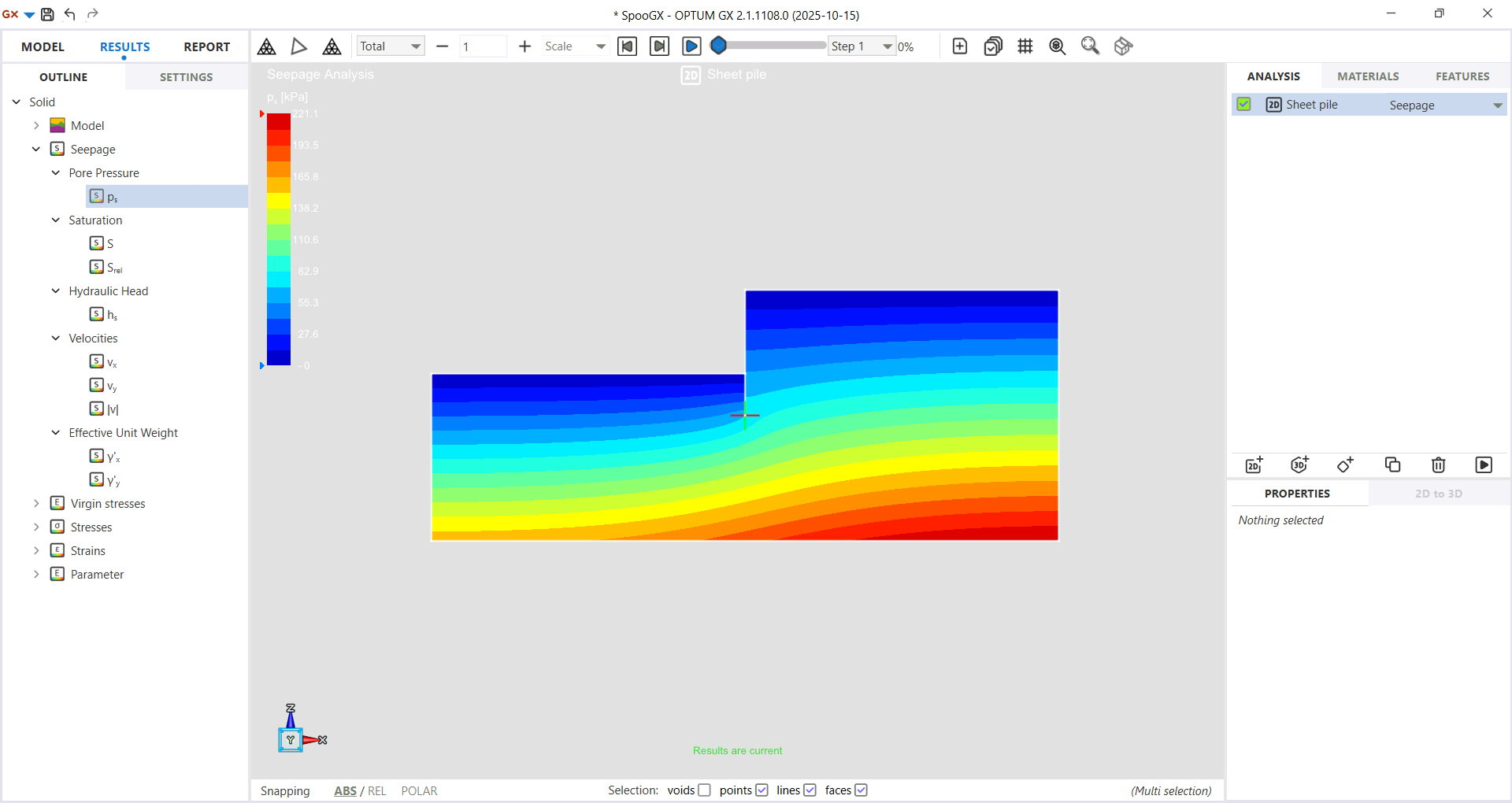
Numerical seepage analysis in OPTUM GX provides a range of valuable outputs that help engineers quantify and visualize groundwater behavior:
- Seepage Quantity (Discharge Rate): Total flow through the structure
- Seepage Path / Flow Lines: Visualization of groundwater movement and potential piping paths
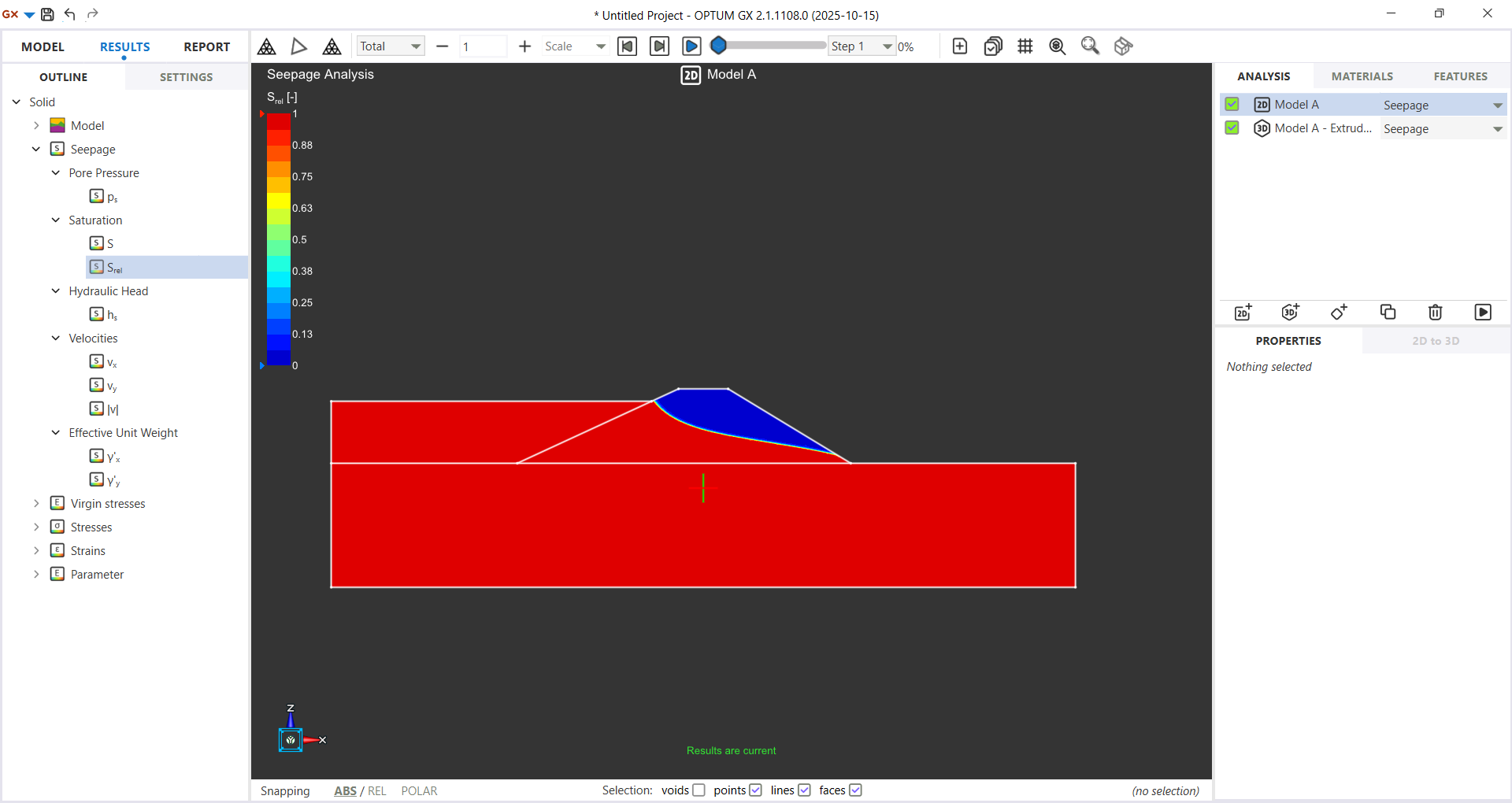
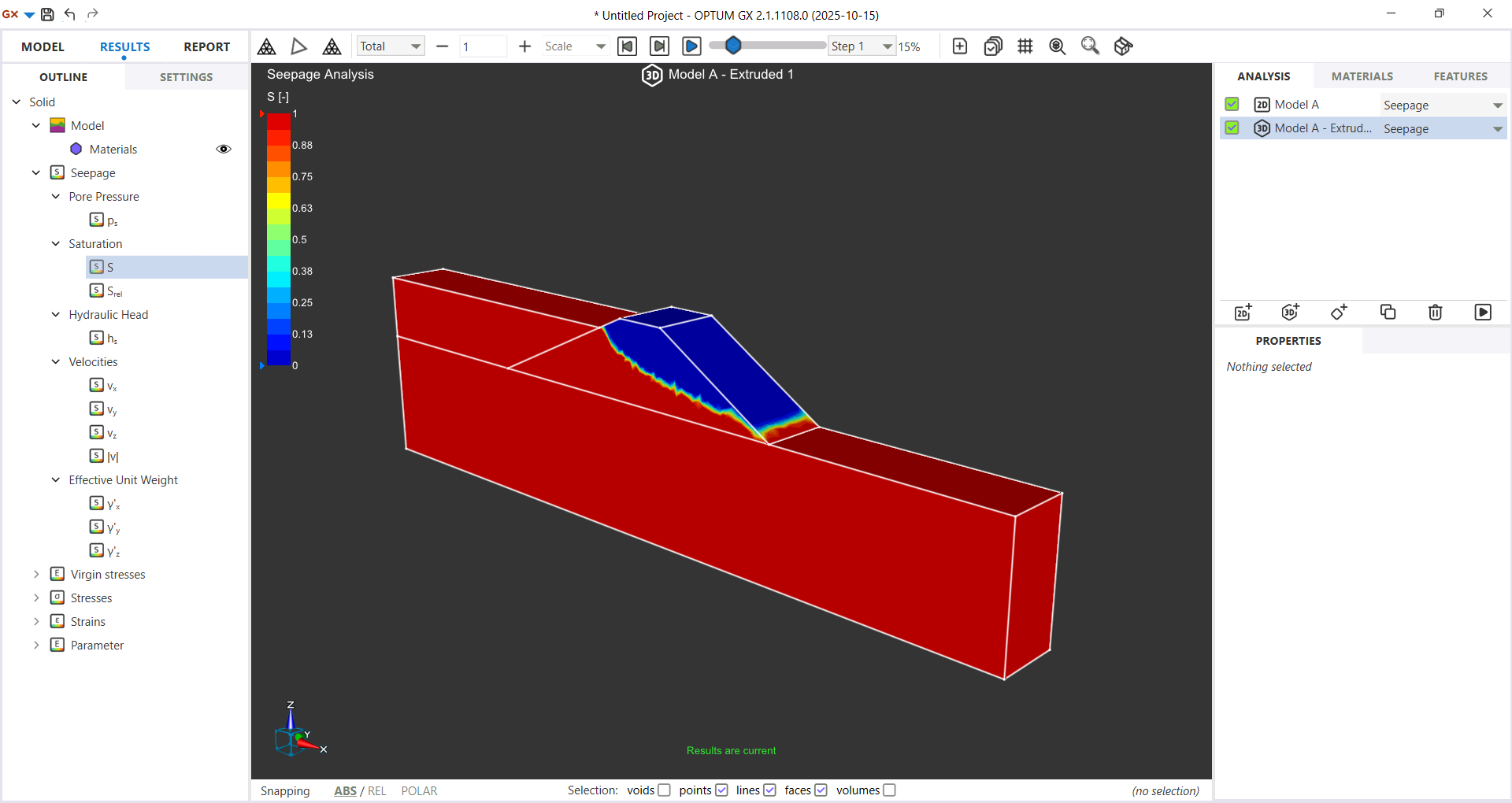
- Phreatic Line: Groundwater surface critical for assessing slope and dam safety
- Saturated and Unsaturated Zones: Differentiation of soil regions under varying hydraulic conditions
- Pore Pressure Distribution: Detailed mapping of pore pressures within the soil mass
- Effective Unit Weight under Seepage: Variation in soil weight due to buoyancy and saturation
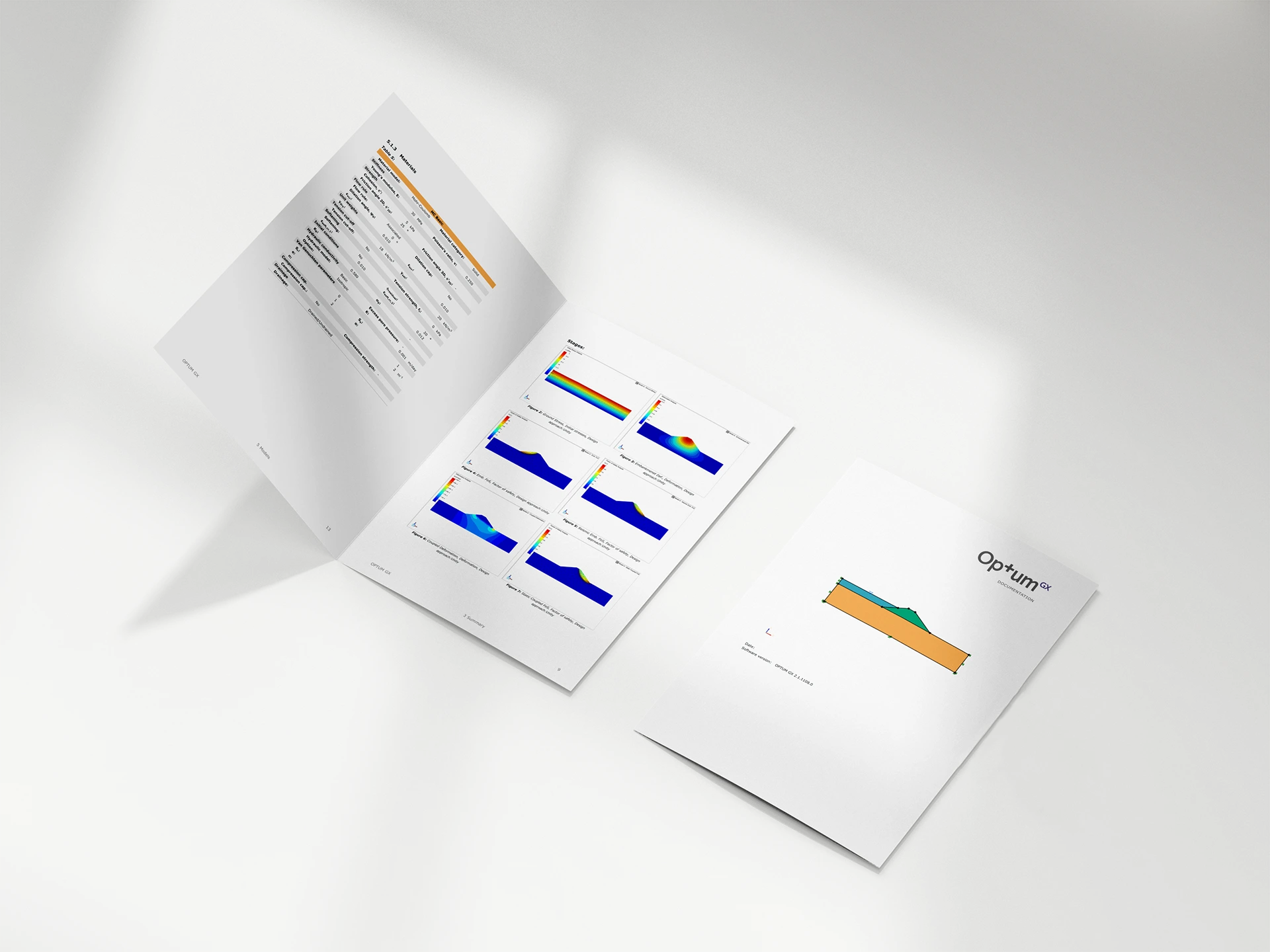
These outputs provide engineers with a clear understanding of seepage mechanisms and serve as essential input for geotechnical design and safety evaluations.
Advantages of Numerical Seepage Modeling in Geotechnical Engineering
Traditional analytical methods and flow nets are limited to simple geometries and steady conditions.
With numerical seepage modeling in OPTUM GX, engineers can capture complex soil behavior, boundary conditions, and hydraulic gradients with high accuracy.
Key advantages include:
✅ Accurate seepage simulation in layered, anisotropic, and heterogeneous soils
✅ Combined seepage and stability analysis for integrated geotechnical design
✅ Time-dependent modeling under realistic site conditions
✅ Automatic calculation of pore pressures and phreatic line directly from FEM results
✅ Clear visualization of seepage paths and hydraulic gradients
Numerical modeling reduces conservative assumptions and provides a stronger, data-driven foundation for geotechnical decision-making.


OPTUM GX
Try Our seepage
Analysis Software
Download a free trial and see how OPTUM GX makes seepage analysis faster, more accurate, and easier to document.
Analyse complex soil and seepage interaction with advanced FELA methods – all in a very user-friendly interface.
Download Free Trial
Practical Applications – From Dams to Slopes and Foundations
Seepage modeling using OPTUM GX is applied in a wide range of geotechnical projects where groundwater flow plays a key role:
- Earth dams and embankments Predicting phreatic line and designing drainage strategies
- Hydraulic structures Evaluating uplift pressure and seepage beneath foundations
- Slopes and retaining walls Assessing seepage-induced instability
- Landfills and environmental barriers Controlling leachate migration
- Foundations and tunnels Estimating seepage flow and effects on bearing capacity
By combining seepage and stability analyses, OPTUM GX helps engineers design safer and more efficient structures under variable hydraulic conditions.
Reliable Seepage Modeling for Safer Geotechnical Design
Seepage is often a hidden but potentially dangerous factor in geotechnical design. If not properly analyzed, it can lead to instability, failure, and costly remediation.
With OPTUM GX, engineers can perform advanced seepage analyses under both steady-state and transient conditions, visualize phreatic lines and flow paths, and accurately compute pore pressures, seepage quantities, and saturation zones.
Numerical seepage modeling in OPTUM GX delivers both accuracy and insight — ensuring safer, more efficient, and more reliable geotechnical designs.
How our geotechnical analysis software helps other engineers
Create an account and try free for 14 days

Frequently ASked Questions
Can’t find what you’re looking for? Contact us here.
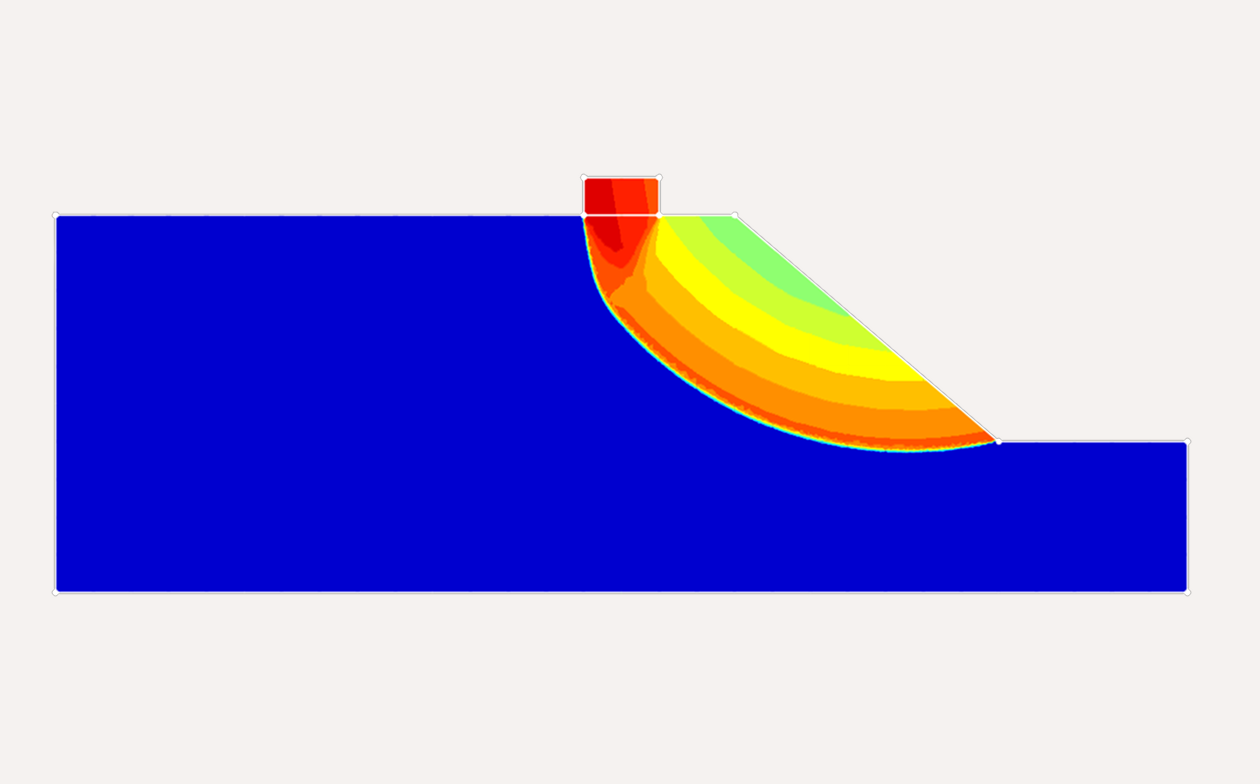

Designing and Analyzing Foundations on Hilly Slopes
October 7, 2026
Determination of stability of slopes have been a major challenge Foundations built on or near hilly terrain do not behave like foundations on flat ground. The absence of confining soil...
Geotechnical
OPTUM GX
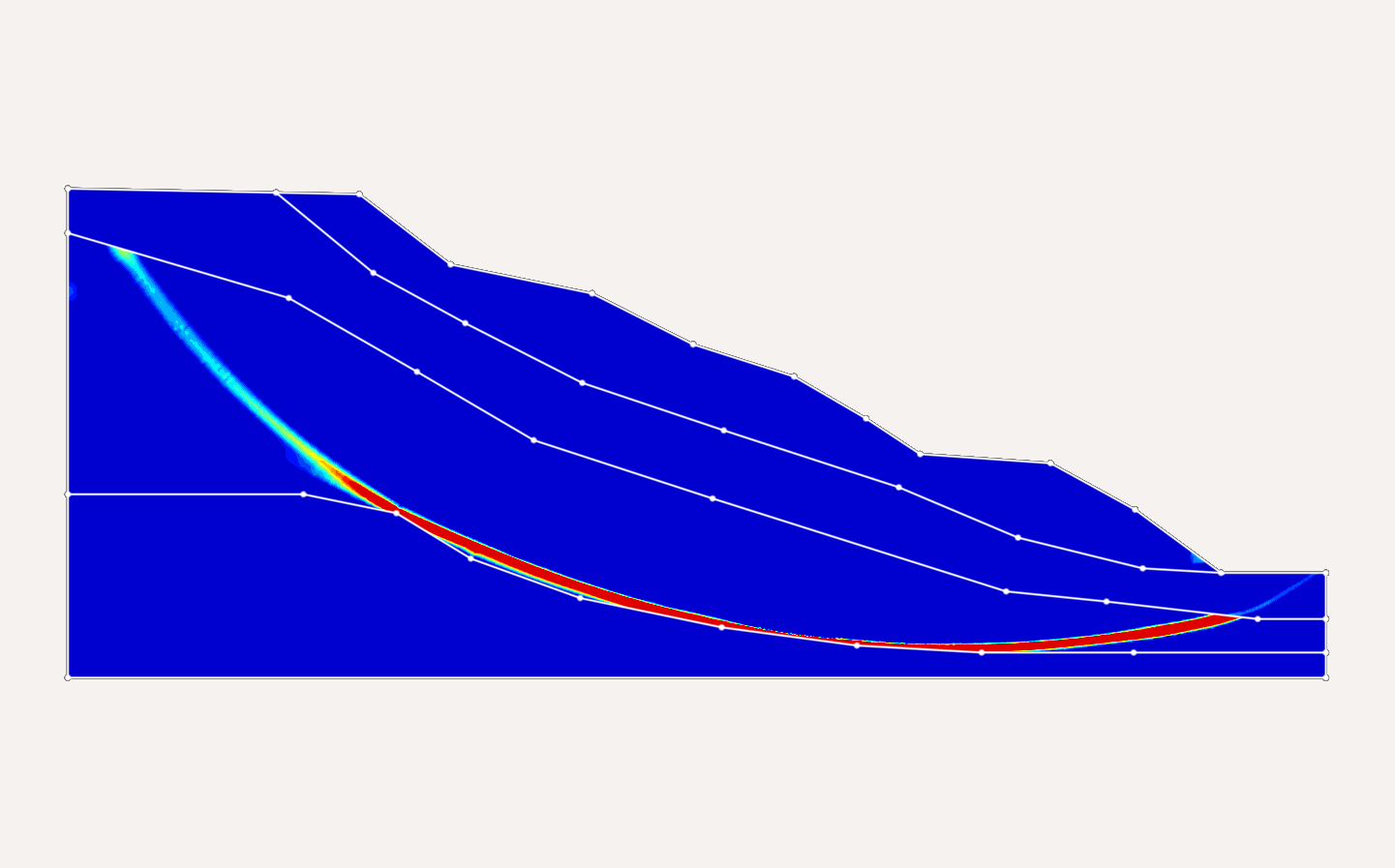
Advanced Slope Stability Assessment through Reliability Analysis in OPTUM GX
August 4, 2026
Determination of stability of slopes have been a major challenge in geotechnical engineering. Slopes that pass through the rigours analysis often fail due to several on-site uncertainties making it a...
Geotechnical
OPTUM GX
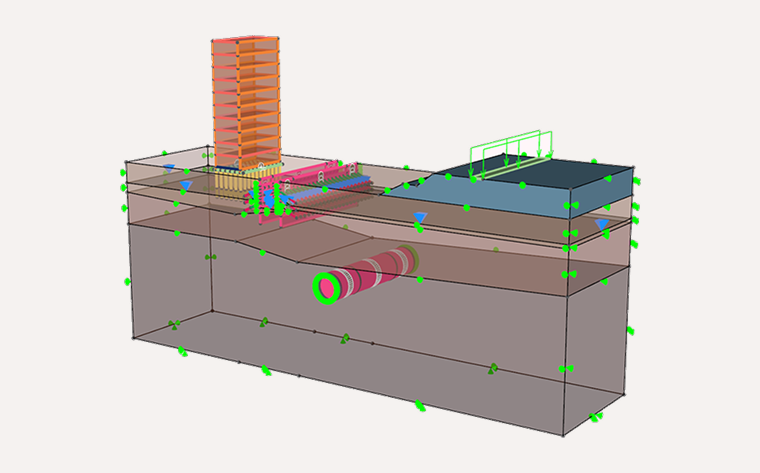
What is Finite Element Analysis?
February 3, 2026
Finite element analysis (FEA) is a numerical method that breaks a complex structure into many small “elements” to predict how it responds to loads, deformation, temperature changes and other physical...
FEA
Finite element analysis
Geotechnical
OPTUM GX